
3 17: Reading- The Concept of Opportunity Cost
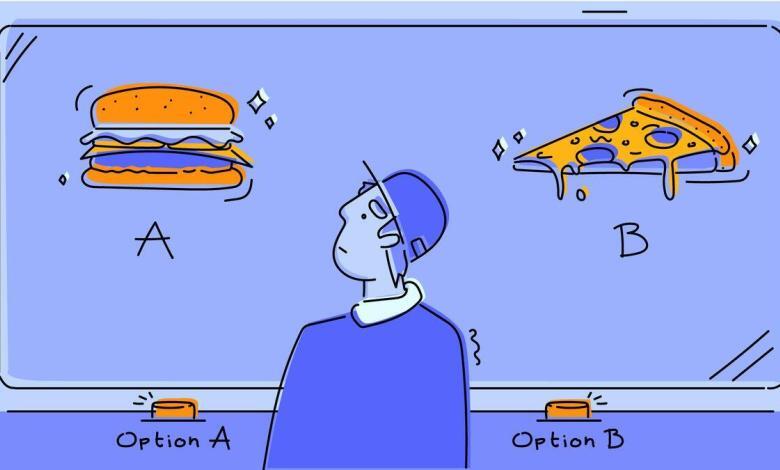
Another thing you can do is use external cues to increase your awareness of opportunity cost. Such cues can, for example, help increase your awareness of the alternatives that you’ll be foregoing. For instance, if instead of buying a certain product now you could save the money and buy something more desirable later, you could look at pictures of what you want to buy later, in order to help yourself internalize the opportunity cost of spending money now.
- For example, if you were to invest the entire amount in a safe, one-year certificate of deposit at 5%, you’d have $1,050 to play with next year at this time.
- The approach economists adopt for valuing these items is known as hedonic pricing.
- However, as the famous disclaimer goes, “Past performance is no guarantee of future results.”
- That is, they reveal their preference for owning the puppy, as the benefit they derive must apparently exceed the opportunity cost of acquiring it.
- Because of scarcity we all face the dismal reality that there are limits to what we can do.
Learning ObjectiveS
Accordingly, the opportunity cost of delays in airports could be as much as 800 million (passengers) × 0.5 hours × $20/hour—or, $8 billion per year. Clearly, the opportunity costs of waiting time can be just as substantial as costs involving direct spending. However, the single biggest cost of greater airline security doesn’t involve money.
Explicit costs
Because many air travelers are relatively highly paid businesspeople, conservative estimates set the average “price of time” for air travelers at $20 per hour. Clearly, the opportunity costs of waiting time can be just as substantial as costs involving direct spending. In some cases, recognizing the opportunity cost can alter personal behavior. You may know perfectly well that bringing a lunch from home would cost only $3 a day, so the opportunity cost of buying lunch at the restaurant is $5 each day (that is, the $8 that buying lunch costs minus the $3 your lunch from home would cost).
Societal Decisions

Companies try to weigh the costs and benefits of borrowing money vs. issuing stock, including both monetary and non-monetary considerations, to arrive at an optimal balance that minimizes opportunity costs. Because opportunity cost is a forward-looking consideration, the actual rate of return (RoR) for both options is unknown at that point, making this evaluation tricky in practice. In accounting, collecting, processing, and reporting information on activities and events that occur within an organization is referred to as the accounting cycle. Accounting is not only the gathering and calculation of data that impacts a choice, but it also delves deeply into the decision-making activities of businesses through the measurement and computation of such data. Even though opportunity costs include nonmonetary costs, we will often monetize opportunity costs, by translating these costs into dollar terms for comparison purposes. Monetizing opportunity costs is valuable, because it provides a means of comparison.
This is because this concept often has to do with scarcity, which is the fact that many of the resources that we have are limited in nature, meaning that we can only choose a limited number of options, and choosing one option over the others necessitates a trade-off in gains. Regardless of who you are and on what scale you’re acting, opportunity cost can guide your actions, and help you determine whether a certain choice, is more beneficial than the available alternatives. This is important because in many cases, a certain option might be appealing because it’s beneficial, but in reality it’s less beneficial than alternatives options, which might not be as appealing at first glance. Remember that opportunity cost is calculated by subtracting the rate of return on your chosen option from the rate of return on the best foregone alternative, rather than from the sum of the rate of return of all the possible foregone alternatives. This is because, when you make a choice, you can choose only a single option, so you’re only giving up a single alternative. By contrast, implicit costs are technically not incurred and cannot be measured accurately for accounting purposes.
For example, this might be the case when it comes to choosing your future career, which can involve considerations such as satisfaction, impact, and prestige, which can be difficult to quantify and compare directly. When considering two different securities, it is also important to take risk into account. For example, comparing a Treasury bill to a highly volatile stock can be misleading, even if both have the same expected return so that the opportunity cost of either option is 0%. That’s because the U.S. government backs the return on the T-bill, making it virtually risk-free, and there is no such guarantee in the stock market.
Instead, they are opportunity costs, making them synonymous with imputed costs, while explicit costs are considered out-of-pocket expenses. For example, when it comes to investments, sunk cost could represent money that someone has spent on a failed investment, while opportunity cost would represent the return that they could have made if they invested the money somewhere else. Assume that a business has $20,000 in available funds and must choose between investing the money in securities, which it expects to return 10% a year, or using it to purchase new machinery. No matter which option the business chooses, the potential profit that it gives up by not investing in the other option is the opportunity cost. The concept of marginal cost in economics is the incremental cost of each new product produced for the entire product line. For example, if you build a plane, it costs a lot of money, but when you build the 100th plane, the cost will be much lower.
Buyers shopping for housing are presented with a variety of options, such as one- or two-story homes, brick or wood exteriors, composition or shingle roofing, wood or carpet floors, and many more alternatives. The approach economists adopt for valuing these items is known as hedonic pricing. Under this an opportunity cost is best described as apex method, each item is first evaluated separately and then the item values are added together to arrive at a total value for the house. The same approach is used to value used cars, making adjustments to a base value for the presence of options like leather interior, GPS system, iPod dock, and so on.


 /wabisabisupplement