
8 3 Receivables before the adoption of ASU 2016-13

A customer may give a note to a business for an amount due on an account receivable or for the sale of a large item such as a refrigerator. Also, a business may give a note to a supplier in exchange for merchandise to sell or to a bank or an individual for a loan. Thus, a company may have notes receivable or notes payable arising from transactions with customers, suppliers, banks, or individuals.
Financial and Managerial Accounting
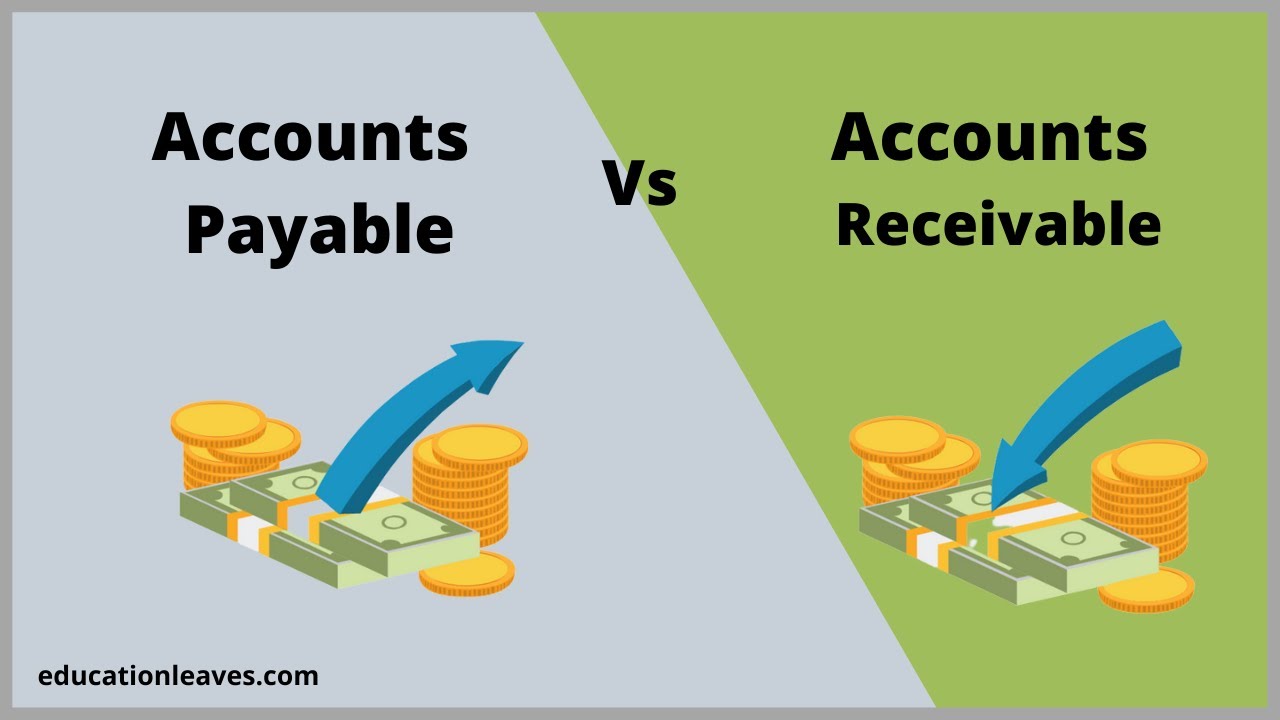
- Now, until the time when Ace Paper Mill receives the payment of $200,000, it will record $200,000 as Accounts Receivable in its books of accounts.
- Accounts Receivable is a normal business transaction for between a company and its customer.
- Sometimes the maker of a note does not pay the note when it becomes due.
Sometimes acompany will classify and label the uncollected account as aDishonored Note Receivable. Using our example, if the company wasunable to collect the $2,000 from the customer at the 12-monthmaturity date, the following entry would occur. Before realization of the maturity date, the note isaccumulating interest revenue for the lender.Interest is a monetary incentive to the lenderthat justifies loan risk. The interest rate is the partof a loan charged to the borrower, expressed as an annualpercentage of the outstanding loan amount.
Notes Receivable Terms
Most often, notes receivable appear when a client needs more time to pay for a sale than the conventional billing terms. Meanwhile, accounts receivable (AR) consists of incoming payments owed by customers. Examples include invoices issued to customers for products or services rendered.
Examples of Accounts Payable
Just as was the case with accounts receivable, there is a possibility that the holder of the note receivable will not be able to collect some or all of the amounts owing. When the investment in a note receivable becomes impaired for any reason, the receivable is re-measured at the present value of the currently expected cash flows at the loan’s original effective interest rate. The difference between a short-term note and a long-term note is the length of time to maturity. As the length of time to maturity of the note increases, the interest component becomes increasingly more significant. As a result, any notes receivable that are greater than one year to maturity are classified as long-term notes and require the use of present values to estimate their fair value at the time of issuance.
Upon approval, the $7,000 is deposited into the business’s checking account the next day and then Square charges 9% of the business’s credit card sales each day until the $7,910 is fully paid. Square says that the advantage of this percentage-of-sales method is that the business does not have to make large payments when business what is the accumulated depreciation formula is slow. The percentage that Square charges stays constant until the loan is paid off fully. As a business owner, you undertake numerous transactions on credit, meaning you purchase as well as sell goods on credit. When you sell goods on credit, your customers owe money to you, so you act as a creditor to your customers.
Accounts Receivable Journal Entries
To illustrate notes receivable scenarios, let’s return toBillie’s Watercraft Warehouse (BWW) as the example. BWW has acustomer, Waterways Corporation, that tends to have largerpurchases that require an extended payment period. On January 1,2018, Waterways purchased merchandise in the amount of $250,000.BWW agreed to lend the $250,000 purchase cost (sales price) toWaterways under the following conditions. The conditions of thenote are that the principal amount is $250,000, the maturity dateon the note is 24 months, and the annual interest rate is 12%. It will become legal evidence in the court if one party does not comply.
Note receivable is recorded separately from accounts receivable on the balance sheet. It is classified as current assets or noncurrent assets depend on the term on a promissory note. If the customer promise to pay within a year, it will be classified as current assets. The total discount $480 amortized in the schedule is equal to the difference between the face value of the note of $10,000 and the present value of the note principal and interest of $9,250. The amortized discount is added to the note’s carrying value each year, thereby increasing its carrying amount until it reaches its maturity value of $10,000.
It is classified as a current asset if the note receivable is issued for less than a year. In case it is used for a longer period, the portion of the amount that is received within that year is classified as a current asset and the rest is classified as a non-current asset. Also, notes receivable are transferable i.e. its ownership can be transferred and the new bearer shall have the claim to note post the ownership transfer. Another opportunity for a company to issue a notes receivable iswhen one business tries to acquire another.
Local Retailer records $20,000 as a credit to its current liability account Notes Payable (and debits its Cash account). The amount loaned to the employee invariably will be higher than the present value using the market rate because the loan is intended as a reward or incentive. This difference would be deemed as additional compensation and recorded as Compensation expense. Are known, the fifth “unknown” variable amount can be determined using a business calculator or an Excel net present value function. For example, if the interest rate (I/Y) is not known, it can be derived if all the other variables in the equation are known. This will be illustrated when non-interest-bearing long-term notes receivable are discussed later in this chapter.
Notes Receivable is increased on the debit (left) side of the account and decreased on the credit (right) side of the account. As mentioned earlier, if Anchor used IFRS the $480 discount amount would be amortized using the effective interest method. If Anchor used ASPE, there would be a choice between the effective interest method and the straight-line method. Square determines the amount to be charged for the loan and the percentage to be charged each day using data analytics.
Notes receivable are initially recognized at the fair value on the date that the note is legally executed (usually upon signing). Monique Danao is a highly experienced journalist, editor, and copywriter with an extensive background in B2B SaaS technology. Her work has been published in Forbes Advisor, Decential, Canva, 99Designs, Social Media Today and the South China Morning Post.


 /wabisabisupplement