
QuickBooks Online Pricing Guide 2024

You can also automate key accounting tasks such as setting reminders for invoices, payments, or deposits. You can simple interest calculator with regular deposits withdrawals automatically notify customers when their payments have been received and you can route invoices through pre-set approval flows. The QuickBooks Plus plan costs $49.50 per month — $99 per month after the first three months — supports five users, and includes several advanced features compared to the Essentials plan. These prices rose in early 2024, when this plan cost just $30 per month. QuickBooks Online offers four pricing plans that start at $35/month and cost up to $235/month, depending on the number of features and users your business needs. QuickBooks Online is a leader in the accounting industry with it being the bookkeeping software of choice for many accountants, certified public accountants (CPAs) and bookkeepers.
Businesses that provide services, rather than goods, should consider the QuickBooks Plus plan. Businesses with inventory will likely get the most benefit from QuickBooks Plus. Large businesses that need access for up to 25 users will probably want to go with QuickBooks Advanced. Although you can track expenses, QuickBooks Simple Start doesn’t enable users to pay bills.
Which QuickBooks Online Pricing Plan Is Right For Me?
Work from anywhere with the power of the cloud and real-time, secure collaboration. QuickBooks Checking Account opening is subject to identity verification and approval by Green Dot Bank. The answers to these questions should help you determine which plan is best for your business. Make sure you are on the right QuickBooks plan, so you aren’t paying for features you don’t need.
QuickBooks Online Advanced plan
For a subscription-based Desktop plan, learn more about QuickBooks Desktop Premier Plus. QuickBooks is a great accounting software option but how much will QuickBooks Online actually cost you? Our QuickBooks pricing guide covers costs, extra fees, plan differences, and more.

Make Sure You’re Using The Right QuickBooks Plan
- Subscription clients in QuickBooks Desktop 2023 (R1) or older versions will need to update to the latest 2023 (R3) version before their subscription expires.
- You can purchase QuickBooks Premier Plus or have access to built-in payroll with QuickBooks Premier Plus + Payroll.
- This easy-to-use and feature-rich software is ideal if you have no bookkeeping experience and want top-notch customer support.
- QuickBooks Plus is the most popular plan for businesses since it includes features such as inventory tracking, project management and tax support.
Because there is an unlimited number of users that can dividends: assets or liabilities use the program, you can maximize its use if you have a team of professionals who need access to your accounting software. For Xero’s Early plan ($13), the number of invoices that users can send each month is capped at 20, but for all other Xero plans, users can send unlimited invoices. QuickBooks is a well-established accounting software that is widely used by businesses from a variety of industries. With five plans, each at different price points, users can choose the plan that best meets their business needs without paying for additional features that they don’t want. As a business grows, users can easily upgrade to a more advanced plan with additional features seamlessly.
Like its other plans, Intuit frequently runs discounts for this service on its website. Yes, QuickBooks Online offers good value for its price across all plans. Granted, the right plan for you will vary depending on your needs, and there are alternative accounting software options on the market that may also be a good fit. Still, QuickBooks Online offers an unbeatable range of features, packaged in a solid interface with good support.
Advanced suits growing businesses, incorporating all previous features plus enhancements for scalability. It’s ideal for high-volume management with advanced analytics and premium support. QuickBooks Solopreneur (formerly known as QuickBooks Self-Employed) costs $20/month or $120 for the first year. This software is best suited for freelancers, allowing them to track income and expenses, track mileage, estimate quarterly taxes, and run basic reports. When it seems like there is a what is a flexible budget business software application for everything, it pays to be choosy. Depending on which product you choose, you will have to make weekly payments plus APR or other fees.
6 1 Chapter overview interest income
And U.S. Treasury bonds are only taxed at the federal level and not at the state or local level. It’s your reward for saving and investing your hard-earned cash wisely (and it’s much better than paying interest for borrowing money). It represents the interest that must be paid on any borrowings, whether they be bonds, loans, convertible debt, or lines of credit. The price that the lender charges the borrower in a financing transaction is the interest expense, also known as the cost of borrowing money. Banks that have assets and liabilities with variable interest rates will, of course, be more sensitive to changes in interest rates than banks that have holdings that are at a fixed interest rate. This could be the result of several different factors, including the nature of the assets and liabilities that are held and the question of whether or not the assets and liabilities have variable or fixed rates.
- It is determined by subtracting interest expense from interest income from the bank’s interest-earning assets and interest expense from the bank’s interest-bearing liabilities.
- Investors should consider ancillary revenue sources and expenses in addition to net interest income when evaluating a bank’s profitability.
- Investors can make sure they are consistently making money over time by keeping a diversified portfolio of assets that provide income.
- You must also prepare a 1099 form to remit to the IRS unless the nomination came from a spouse.
- This is frequently seen with mortgages, as most banks offer both fixed- and adjustable-rate mortgages.
Regular taxable interest is taxed as ordinary income like an individual retirement account (IRA) or retirement plan distribution. Interest income is added to the taxpayer’s other ordinary income, such as wages or salary. At the end of every month, the account statement will reflect the interest that the bank pays for borrowing the account holder’s money. It is important to note that banks use what is called “fractional banking,” which means that only a part of customer deposit accounts can be used by the bank as lending funds. The bank must retain a certain level – known as the reserve – of deposit account funds.
Example of net interest income
For loans, borrowers will have likely made payments that reduce the principal balance, resulting in lower interest. For savers, general activity (including the addition of last month’s interest) often changes the applicable balance. The applicable interest rate is then multiplied against comparing credentials the outstanding amount of money related to the interest assessment. For savings this is often the average balance of savings for a given period. Today, interest rates can be applied to various financial products including mortgages, credit cards, car loans, and personal loans.
Once you purchase the asset, there isn’t much more to do in income investing. In this situation, the way interest earning is presented will primarily depend on the nature of the business’s core activity. The interest income comes out as $84k in 2020, which increases to $92k in 2021 due to the positive rise in the cash balance on a year-over-year (YoY) basis. While not necessary for our simple exercise, setting up a circularity switch is crucial in a properly integrated 3-statement model. Like its counterpart, interest expense, interest income is modeled when building out the debt schedule of a financial model. In such cases, it is worth the time to locate the individual amounts broken out separately, so that each item can be referenced and projected in the forecast.
Supercharge your skills with Premium Templates
Treasury bonds and savings bonds is taxable on your federal return, but it’s usually tax-free at the state level. And this works in reverse as well—interest on municipal bonds is tax-free at the federal level. Municipal bond interest is also often tax-free at the state level if you invest in a bond that’s issued in the same state where you reside. Interest earned on Series EE and Series I savings bonds may also be excluded from taxes if it was used to pay for qualified higher education expenses.
Marginal Tax Rates
Dividends are usually taxed at a lower rate; the US has a 15% tax rate on dividends. If the interest rate on your savings account isn’t competitive, inflation may be eating away at the value of the money you’ve earned, leaving you with a balance that will be worth less in a year than it does now. The ability to withdraw money from a savings account at any moment makes it incredibly liquid. Members of an LLC may lend money to the LLC to buy a property and receive a monthly principal and interest payment, or they may pool their funds to buy a rental property and split any earnings. Online traders can buy and sell income-producing assets like bonds and bond index funds.
What is asset? Definition, Explanation, Types, Classification, Formula, and Measurement
The bank’s interest revenue will total $50 million, and its interest expenses will total $24 million, resulting in a net interest income of $26 million. If a bank’s loan portfolio is worth $1 billion and earns an average interest rate of 5 percent, it will bring in $50 million from interest revenue. Over time, the overall movement of the average net interest margin has followed in the footsteps of the movement of the federal funds rate. Similarly, the NII would experience a decline if there was a narrowing in the spread between rate-sensitive assets and liabilities. A rise or fall in non-performing assets (NPAs) over time can also affect NIIs, and this can happen either positively or negatively. In general, the spread between rate-sensitive assets and rate-sensitive liabilities ought to rise at a faster rate in comparison to one another if banks are required to earn a higher NII.
Main Purposes of Financial Statements (Explained)
A bank’s profitability and growth indicator is its net interest margin. The term net interest margin refers to the disparity between the total amount of interest gained through interest earnings and the total amount of interest lost due to interest payments made to lenders. Hybrid financial products offer a return guaranteed to be paid out at maturity, based on the movement of a pre-specified market index, on a date that has been determined in advance. However, in addition to the interest they collect on loans, banks can also have other sources of revenue, such as fees from investment banking or investment advisory services. Interest is straightaway taxed at your income tax level with some concessions for various groups like senior citizens, etc.
Assets Generating Interest Income
The additional costs that accompany running a bank are comparable to those of running any other type of business and include things like rent, utilities, employee wages, and management salaries. For this reason, the interest rate on a personal loan will almost always be higher than the interest rate on a mortgage. All investing is subject to risk, including the possible loss of the money you invest. Vanguard’s advice services are provided by Vanguard Advisers, Inc. (“VAI”), a registered investment advisor, or by Vanguard National Trust Company (“VNTC”), a federally chartered, limited-purpose trust company.
What Is a Millimeter? Definition, Formula, Conversions, Examples
Content
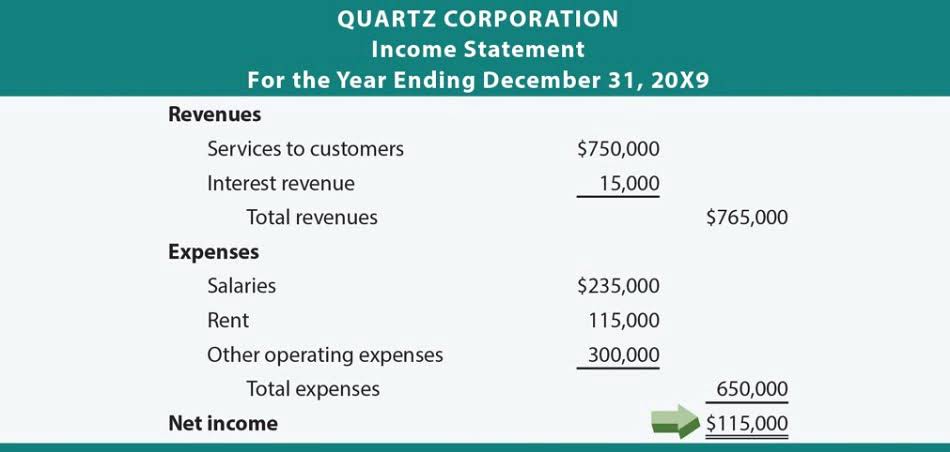
When an analyst must present various different types of units, it is recommended to add a “units” column so that each item contains a label for easy reference. The Latin numeral MM is frequently used to designate that the units used in presenting information (financial and non-financial) are in millions. The example below shows how figures can be portrayed in millions. A recent review of studies in BMJ Global Health highlighted “possible associations” of long-term health problems among Iraqis linked to depleted uranium use on the battlefield.
When fired, a depleted uranium munition becomes “essentially an exotic metal dart fired at an extraordinarily high speed,” Rand senior defence analyst Scott Boston added. While you can make MM stand for millions of anything, it’s important that the reader knows whether you’re talking about dollars, euros, units shipped, etc. If, say, you use it for both units and dollars in the same document, separate the different categories so your readers don’t get confused. This website is using a security service to protect itself from online attacks.
mile $= \underline$ mm
Let’s learn more about the unit ‘millimeter’. We have measures like meters and kilometers to express bigger distances, like the distance between two cities, the height of mountains, lengths of rivers, etc. However, the length of the wheat grain, the size of an ant, the thickness of a paper, etc., are some measures we find difficult to express in bigger units of measurement like meters. Here, millimeters help us accurately express their length. We can use the following conversion chart to convert millimeters into different metric units of length.
- The smallest unit of measuring length is Planck Length.
- We can use the conversion chart to convert 147.5 mm into cm.
- Therefore, the length of a football pitch is 105,000 mm.
- If a financial statement has a lot of large figures, the accountant may simply dispense with abbreviations.
- We have measures like meters and kilometers to express bigger distances, like the distance between two cities, the height of mountains, lengths of rivers, etc.
Depleted uranium is a byproduct of the process to create the rarer, enriched uranium used in nuclear fuel and weapons. Although far less powerful than enriched uranium and incapable of generating a nuclear reaction, depleted uranium is extremely dense – more dense than lead – a quality that makes it highly attractive as a projectile. If the company sells 26,000 units, the accountant can record that as 26M units. If net income runs to $6,500,000, it goes on the books as $6.5MM.
Using a Metric Ruler
As we learned in this lesson, millimeters are a small metric unit for measuring length. They’re useful when measuring small objects, or when measurements need to be more precise than centimeters. Millimeters are used to measure in many applications around the world. They’re used especially when the accuracy for measurement needs to be more precise than inches. A common use for millimeters is in cutting hair. A pair of hair clippers set to Level 1, will cut hair to 3 millimeters long.

The use of two m’s to denote millions is becoming less common. Frequently, in finance and accounting settings now, an analyst will use k to denote thousands and a capitalized M to denote millions. If you think there’s any possibility of your use of MM being confusing or being misinterpreted, you’re safer writing out the numbers or using “millions.” It’s also common to see K used for 1,000 and B for a billion. To avoid confusion, use any and all abbreviations consistently throughout all your financial records.
How has Russia reacted to the US announcement?
Christianlly has taught college Physics, Natural science, Earth science, and facilitated laboratory courses. He has a master’s degree in Physics and is currently pursuing his doctorate degree.
- Harold Averkamp (CPA, MBA) has worked as a university accounting instructor, accountant, and consultant for more than 25 years.
- These examples are programmatically compiled from various online sources to illustrate current usage of the word ‘mm-hmm.’ Any opinions expressed in the examples do not represent those of Merriam-Webster or its editors.
- The use of two m’s to denote millions is becoming less common.
- Particles in aerosols can be inhaled or ingested, and while most would be excreted again, some can enter the blood stream and may cause kidney damage.
- A recent review of studies in BMJ Global Health highlighted “possible associations” of long-term health problems among Iraqis linked to depleted uranium use on the battlefield.
- Stating at the top of the report that “all figures are in millions of dollars” should take care of it.
- So, we have to divide 750 by $(10 \times 10 10)$ or 1000.
If a financial statement has a lot of large figures, the accountant may simply dispense with abbreviations. Stating at the top of the report that “all figures are in millions of dollars” should take care of it. Both approaches are allowed under standard accounting rules.
The Guardian view on ties between North Korea and Russia: bad news, and not only for Ukraine
Putin and the Belarusian president said in July that Russia had already shipped some of the weapons. The IAEA notes that depleted uranium is mainly a toxic chemical, as opposed to a radiation hazard. Particles in aerosols can be inhaled or ingested, and while most would be excreted again, some can enter the blood stream and may cause kidney damage. Select a conversion type and the desired units.
The prefix milli is derived from the Latin mille meaning one thousand and is symbolized as m in the Metric System. Milli denotes a factor of one thousandth (1/1000th) which means that there are 1,000 millimeters in a meter. 3.) You need a table that has a height of at least sixty centimeters.
The action you just performed triggered the security solution. There are several actions that could trigger this block including submitting a certain word or phrase, a SQL command or malformed data. Some examples of objects having about 1 millimeter length areA sharp pencil point and the tip of a sewing needle are approximately 1 mm in length. To reach m from mm, we must jump three places to the left.
What matters is that readers look at the figures and understand the amounts. A millimeter is usually the smallest unit you can measure using what does mm mean a regular ruler. However, there are many units smaller than a millimeter. The smallest unit of measuring length is Planck Length.
The MM abbreviation works whether the entry is in dollars, some other currency or millions of items or customers. These examples are programmatically compiled from various online sources to illustrate current usage of the word ‘mm-hmm.’ Any opinions expressed in the examples do not represent those of Merriam-Webster or its editors. We can use the conversion chart to convert 147.5 mm into cm. This table provides a summary https://www.bookstime.com/ of the Length or Distance units within their respective measurement systems. When preparing financial statements, accountants will typically write a note at the top of the income statement or the balance sheet saying, “All figures are expressed in millions of U.S. dollars,” for example. In this example, we intentionally chose a piece of analysis that contained various different units, such as dollars and shares.

Stock Dividends and Splits Financial Accounting

Many stock exchanges will delist stocks if they fall below a certain price per share. Apple’s outstanding shares increased from 861 million to 6 billion shares. However, the market capitalization of the company remained largely unchanged at $556 billion. The day after the stock split, the price had increased to a high of $95.05 to reflect the increased demand from the lower stock price.
- After a 2-for-1 stock split, an individual investor who had owned 1,000 shares might be elated at the prospect of suddenly being the owner of 2,000 shares.
- However, the market capitalization of the company remained largely unchanged at $556 billion.
- Rapidly growing companies often have share splits to keep the per share price from reaching stratospheric levels that could deter some investors.
- After a split, the stock price will be reduced (because the number of shares outstanding has increased).
- For example, a 2-for-1 stock split would double the number of shares outstanding and halve the par value per share.
- A) Lower the trading price of the stock per share.B) Increase the number of authorized shares.C) Increase legal capital.D) Increase the number of outstanding shares.
- In the case of a short investor, prior to the split, they owe 100 shares to the lender.
Part 3: Confidence Going Into Retirement

The amount transferred for stock dividends depends on the size of the stock dividend. For stock dividends, most states permit corporations to debit Retained Earnings or any paid-in capital accounts other than those representing legal capital. In most circumstances, however, they debit Retained Earnings when a stock dividend is declared. If the event is a stock split, there is no change in either Retained Earnings or Common Stock, only a decrease in par value and an increase in the number of issued and outstanding shares. A stock split occurs when a company increases the number of outstanding shares with a proportional decrease in the par or stated value. Stock dividends and stock splits affect the number of common shares outstanding, QuickBooks which in turn influences the earnings per share (EPS) calculation.
Why You Can Trust Finance Strategists
Small increases in the number of shares are accomplished through small stock dividends and are distributed in order to provide stockholders with a symbolic Bookstime return on their investment that does not require a cash distribution. Depending on the circumstances, the board of directors of a corporation may wish to take steps that will change the number of outstanding shares of stock without affecting the firm’s assets or liabilities. When the market price per share is too high, investors may lose interest because it is most economical to purchase stock in round lots of 100. A stock price that is too high makes round-lot purchases impossible for some potential investors. In May 2011, Citigroup reverse split its shares one-for-10 in an effort to reduce its share volatility and discourage speculator trading.

Create a Free Account and Ask Any Financial Question

Though the split reduced the number of its shares outstanding from 29 billion to 2.9 billion shares, the market capitalization of the company stayed the same (at approximately large stock dividends and stock splits are issued primarily to: $131 billion). Another possible reason for the price increase is that a stock split provides a signal to the market that the company’s share price has been increasing; people may assume this growth will continue in the future. When a stock splits, it can also result in a share price increase—even though there may be a decrease immediately after the stock split. This is because small investors may perceive the stock as more affordable and buy the stock.

Part 2: Your Current Nest Egg
- For example, a shareholder who owns 100 shares of stock will own 125 shares after a 25% stock dividend (essentially the same result as a 5 for 4 stock split).
- For stock dividends, most states permit corporations to debit Retained Earnings or any paid-in capital accounts other than those representing legal capital.
- While a large stock dividend has the same purpose as a stock split, it is more easily executed than a split when there is a sufficient number of authorized and unissued shares.
- Corporations usually account for stock dividends by transferring a sum from retained earnings to permanent paid-in capital.
- If so, the company would be more profitable and the shareholders would be rewarded with a higher stock price in the future.
The pizza has 8 slices and costs $16 per pizza which is $2 per share ($16 price / 8 slices). I ask the pizza parlor to double-cut the pizza into 16 slices instead of 8 slices. The cost of my pizza is still $16 but the cost per slice is now $1 per slice ($16 cost / 16 slices). The percentage of shares issued determines whether a stock dividend is a small stock dividend or a large stock dividend.
Rapidly growing companies often have share splits to keep the per share price from reaching stratospheric levels that could deter some investors. In the final analysis, understand that a stock split is mostly cosmetic as it does not change the underlying economics of the firm. To effect the split, the stockholders approved an increase in the authorized common stock from 10,000,000 to 25,000,000 shares. All references to per-share data and stock option data have been adjusted to reflect this stock split.
Master Budgeting Explained: Component, Examples, and How to Prepare

It enables a company to allocate its resources effectively, monitor its progress against the plan, and make adjustments as necessary to achieve its financial objectives. By monitoring actual performance against the budget, managers can identify variances and take corrective action to address any deviations from the plan. They can also identify opportunities to improve efficiency, reduce costs, and increase profitability. A master budget is a key tool for controlling costs and optimizing the company’s financial performance. Suppose that you are part of a team that is responsible for creating ABC Corporation’s Master Budget. So, the sales, or revenue expectations are the foundation of every annual business plan.
What Is a Master Budget and Why Is It Important for Businesses?
- The master budget serves as a blueprint for the management to allocate resources, evaluate performance, and control operations.
- Quarterly updates are suitable for businesses that operate in industries with stable demand and supply, such as manufacturing or distribution.
- How do finance professionals translate business goals into a comprehensive financial plan?
- They can take necessary steps to manage their cash flow, such as delaying payments or arranging short-term financing.
- It provides a clear and consistent direction for the organization to achieve its objectives and mission.
The budgeting team should also prepare contingency plans and alternative scenarios to cope with the potential risks and opportunities that may arise during the budget period. Most fixed items will be the same each quarter, although some fixed costs, such as an advertising campaign, can fluctuate periodically. The sales budget reflects Budgeting for Nonprofits forecasted sales volume and is influenced by previous sales patterns, current and expected economic conditions, activities of competitors, and so forth.
- It is closely linked to the production budget and ensures that the company has enough materials to meet its production goals without overstocking.
- Some companies pay for market trend data to learn about industry and product trends.
- The pro forma income statement is a company’s forecasted income statement that combines sales revenue with other budget costs.
- Most businesses prepare their budgets annually, while others do it quarterly or bi-annually.
- As we said earlier, the components of master budget are interconnected, which means that numbers from one component budget flow to another one.
Supports Strategic Planning
- Further, the sidebar notes also indicate that the average overhead rate (fixed and variable together, applied to the total labor hours for the year) is $13 per hour.
- It can be presented in the monthly or quarterly form as per the requirement and covers the entire fiscal year.
- Each department can discuss its budgeting needs, strategic initiatives, potential challenges, and constraints.
- Align your metrics to the strategic priorities set earlier in the budgeting process.
- In a top-down budget approach, the the budget is created by senior management and then passed down to the lower levels for execution.
A cash budget is a record of expected cash inflows and outflows over the upcoming budget period. A cash budget helps ensure a business has enough funds to cover short-term needs, like payroll, taxes, and inventory costs, and shows the organization’s financial health. Compare the operating expense budget with the actual results and analyze the variances. Therefore, it is important to compare the budget with the actual results and identify the causes of the differences. The differences are called variances, and they can be favorable or unfavorable.
Developing the Production Budget
The cost of goods sold budget is essential for managing production costs, determining pricing strategies, and achieving profit margins. The projected balance sheet, or financial budget, depends on many items in the projected income statement. Thus, the logical starting point in preparing a master budget is the projected income statement, or planned operating budget. In diagram below, we depict a flowchart of the financial planning process that you can use as an overview of the elements in a master master budget components budget. The remainder of this chapter describes how a company prepares a master budget.
- Through this type of budgeting, they become aware of their financial obligations along with what remains with them after all deductions.
- In this section, we will explore the concept of the master budget, its benefits and challenges, and its main components.
- Competitive SEO analysis is the process of researching and evaluating the strengths and weaknesses…
- Assume finished goods inventory at the end of the fourth quarter budget period is estimated to be 9,000 units.
- The cash budget provides the necessary tool to anticipate cash receipts and disbursements, along with planned borrowings and repayments.
- As revealed by the Labor sheet, the scheduled production is multiplied by the number of hours necessary to produce each unit.
Gathering Data for the Master Budget

Each of the sub-budgets is made up of separate but interrelated budgets, and the number and type of separate budgets will differ depending on the type and size of the business. The direct materials budget uses information from the sales budget to compute the number of units necessary for production. This information is used in other budgets, such as the direct materials budget, which plans when materials will be purchased, how much will be purchased, and how much that material should cost. We will demonstrate how to create each of these sub-budgets in later sections.

Cloud Data Transfer & Storage Cost Reduction Strategies

With many perspectives on the budget process come potential differences in opinion. Create space for stakeholders to air concerns, discuss potential downsides, present trade-offs, and collectively establish priorities for the business. Bring clear data to share the story of how projects will benefit the organization and align to the larger needs of the business. Allow stakeholders to ask questions and provide feedback on budget proposals to identify potential areas of improvement or more efficient solutions. Creating a template for budget proposals allows reviewers to perform an apples-to-apples comparison on the merits, challenges, costs, and potential returns of a proposal. To do this, teams must define the resources (capital, materials, and talent) necessary to take on new initiatives and support current programs.

These metrics are useful for testing the validity of the budget model against actual results in the past. Understanding the purpose makes the master budget definition and process clearer. It is a planning tool used by the management to direct and judge the performance of the various responsibility centers that reside within an organization to have proper control. This budget undergoes multiple iterations before it gets approved by the senior management to allocate funds accordingly. This budget is prepared under the guidance of the Budget director, which is petty cash usually the Controller of the company. Understanding the master budget and its components is a critical step in building a budgeting process that aligns strategy with planning and resource allocation.
Notes receivable debit or credit?
One advantage is that Notes Receivable provide a form of security against default by the borrower. The borrower is legally obligated to repay the loan according to its terms, which reduces the risk of loss for the lender. Chartered accountant Michael Brown is the founder and CEO of Double Entry Bookkeeping. He has worked as an accountant and consultant for more than 25 years and has built financial models for all types of industries. He has been the CFO or controller of both small and medium sized companies and has run small businesses of his own.
- It has a stronger legal claim than Accounts Receivable, meaning it is more likely to get paid than Accounts Receivable if the maker enters bankruptcy.
- A credit note is sent to inform about the credit made in the account of the buyer along with the reasons mentioned in it.
- The ability to raise cash in this way is important to small and medium-sized businesses, which may have limited access to finance.
- In this case the note receivable is issued to replace an amount due from a customer currently shown as accounts receivable.
This is treated as an asset by the holder of the note, and a liability by the borrower. Overdue accounts receivable are sometimes converted into notes receivable, thereby giving the debtor more time to pay, while also sometimes including a personal guarantee by the owner of the debtor entity. The guarantee provision makes the note receivable easier to collect than a standard account receivable. When a note receivable originates from an overdue receivable, the payment tends to be relatively short – typically less than one year. Notes receivable have several defining characteristics that include principal, length of contract terms, and interest. The principal of a note is the initial loan amount, not including interest, requested by the customer.
A written promissory note gives the holder, or bearer, the right to receive the amount outlined in the legal agreement. Promissory notes are a written promise to pay cash to another party on or before a specified future date. For example, a company may have an outstanding account receivable in the amount of $1,000. The customer negotiates with the company on June 1 for a six-month note maturity date, 12% annual interest rate, and $250 cash up front.
What is the Difference Between a Note Receivable and a Note Payable?
Essentially, debits represent money coming into your account or being taken out from another account. On March 31 a similar entry will be made to record the interest revenue earned in March. On February 28 a similar entry will be made to record the interest revenue earned in February. For the purposes of accounting class, we will focus on Accounts Receivable transactions where an Accounts Receivable is turned into a Note Receivable. In some instances, an Accounts Receivable amount may be changed to a Note Receivable by agreement between the company and the customer.
- At the maturity date of the note, the maker is obligated to pay the principal plus interest.
- Using our example, if the company was
unable to collect the $2,000 from the customer at the 12-month
maturity date, the following entry would occur. - For the purposes of accounting class, we will focus on Accounts Receivable transactions where an Accounts Receivable is turned into a Note Receivable.
- It is not unusual for a company to have both a Notes Receivable and a Notes Payable account on their statement of financial position.
Automating your manual accounts receivable processes will deliver tremendous benefits across billing, payments, collections, reporting, and more. After the third month, the note has now been completely unadjusted trial balance example purpose preparation errors paid off, and Anne’s Apparel has recorded a total of $246 in interest revenue over the three-month period. QuickBooks is our top pick for accounting software, with its many capabilities and features.
Notes Receivable in Accounting
Receivables are debts that customers owe you for products or services you’ve delivered. These debts are assets for your business; in fact, you can even borrow money against them, using receivables as collateral for a loan. Receivables are the opposite of payables, which are debts your company owes to other entities or individuals. By transferring the note to Accounts Receivable, the remaining balance in the notes receivable account would only contain the amounts of notes that are yet to mature.
6: Accounting for Notes Receivable
For example, the maker owes $200,000 to the payee at a 10% interest rate, and pays no interest during the first year. Being strategic about credit terms and incentives is one way that businesses can leverage the AR function to improve business operations and set themselves up for success. Setting up an automated AR system, especially one that includes methods for customers to pay digitally directly from the invoice, can help customers pay faster to satisfy the credit terms.
The accounts receivable process
Furthermore, by transferring the note to Accounts Receivable, the remaining balance in the notes receivable general ledger contains only the amounts of notes that have not yet matured. When the borrower or maker of a note fails to make the required payment at maturity, the note is considered to have defaulted. For example, assume that the Bullock Company has received a 3-month, 18% note for $5,000 dated 1 November 2019 in exchange for cash.
What is notes receivable?
A Note Payable is recorded when a company is on the “paying” side of a debt. The difference in recording is based on which side of the transaction a company is on. If the note is due within one year of the balance sheet date, it will be classified as a current asset.
Often, a business will allow customers to convert their overdue accounts (the business’ accounts receivable) into notes receivable. You should classify a note receivable in the balance sheet as a current asset if it is due within 12 months or as non-current (i.e., long-term) if it is due in more than 12 months. A credit is an amount that the business owes to another business or a person. From this session, we know that notes receivable is recorded as an asset and we also know it can be dishonored. However, as an asset what are the debit and credit rules that are applicable to notes receivable when making a journal entry? In order to answer this, let’s look at the debit and credit rules that are applicable to notes receivable.
What are credit terms?
The principal value is $300,000, $100,000 of which is to be paid monthly. Now let’s look at an example of a balance sheet, which shows the accounts in the company’s books. Accounts receivable increases after the company records sales and then drops after some customers remit payment.
Outstanding Checks Financial Accounting I Vocab, Definition, Explanations Fiveable

The payee cannot cash or deposit the check once a stop payment has been issued.The payer’s bank has no way of knowing that a check has been written until the payee deposits or cashes the check. Besides the liability it creates, the payor may forget Certified Bookkeeper that they wrote the check and spend money allocated for the check. When the payee cashes the check, and their bank tries to pull funds from the payor’s account, the payor will get hit with an overdraft or non-sufficient funds (NSF) fee.
How Do Outstanding Checks Work?
Implementing these strategies can greatly reduce the risk to cash flow stability posed by outstanding checks, keeping financial management on track and reliable. For individuals, the risk lies in overspending and the potential for overdraft fees should the outstanding check be presented for payment unexpectedly. If you’ve issued an outstanding check, you need to monitor your account. The money to cover the check must be available when your recipient deposits the check.
- By not trusting the payee to take action, you remove the possibility that they will forget or put off cashing or depositing the check.
- You can then work out a resolution with the payee, perhaps a different payment method.
- When the check reaches this expiration date, it is no longer valid, and the bank the check was written from may not honor the payment.
- On your reconciliation sheet, outstanding checks are often subtracted from your balance per bank because these withdrawals have not yet happened but are simply a timing matter.
- If more than six months have passed, that check may well be expired and considered void.
The Risk of Stale Checks and the Need for Stop Payments
Bouncing an outstanding check can lead to financial consequences, such as fees imposed by the bank, damage to your credit rating, and potential legal actions from the payee. Be mindful of what outstanding checks you’ve written before drawing down your bank balance. Accounting inconsistencies may arise if outstanding checks are not reported and tracked in the appropriate manner. Because of this, keeping correct financial records can be difficult, and it may lead to problems during audits or when reconciling finances. For example, payments may show as being paid but if the cash has not yet been debited from the account, there may be inconsistencies worth reconciling.

Advance Your Accounting and Bookkeeping Career
The amount of outstanding checks is sometimes referred to as float. Fortunately, banks don’t have a legal obligation to honor checks written more than six months in the past. If the old check isn’t six months old, or if you want an extra layer of protection, two strategies can protect you. As long as you know not to spend money promised to someone else, avoiding expensive consequences such as overdrafts or insufficient funds fees is possible.
Example of an Outstanding Check in the Bank Reconciliation
Individuals can reduce surprise withdrawals in personal accounts by using online bill payment instead of issuing paper checks. In U.S. accounting textbooks, every check that has not been cleared is termed an outstanding check. This is because the bank still needs to clear it on the payer’s end, as it is yet to be presented, and the status of its clearance remains uncertain. He issues an outstanding check, valid for one month, upon the delivery of the mobile shipment from the dealer to the shop.
- As a result, the actual displayed amount in an account (meaning current or available balance) can vary from time to time.
- © 2024 Greenlight Investment Advisors, LLC (GIA), an SEC Registered Investment Advisor provides investment advisory services to its clients.
- That said, both outstanding checks and outstanding deposits refer to transactions that have not yet been posted to your account.
- With banking activity becoming increasingly electronic, another way to avoid writing a check and forgetting about it is to use the checking account’s online bill pay service.
- An outstanding check refers to a check that has been written by a business but has yet to be deposited by the recipient.
When Outstanding Check Turns Void

This can be a challenge for both consumers and small business owners, because enough cash must be kept in the account drawn upon to cover outstanding checks until they are cashed. Outstanding checks can complicate accounting because the assumption is that a check gets issued, deposited, and paid. The payor must be sure to keep enough money in the account to cover the amount of the outstanding check until it is cashed, which could take weeks or sometimes even months. An outstanding check is a check payment that has been recorded by the issuing entity, but which has not yet cleared its bank account as a deduction from its cash balance. The concept is used in the derivation of the month-end bank reconciliation. This is why your (or company) bank accounts need to be reconciled with the bank statement.
Factors Leading to a Check Remaining Outstanding
If you run a business it can make things complicated as businesses need to make adjustments during reconciliation on their ledgers. If you are planning on writing a check, make sure to you are up to date on when you need to deposit its cash. This can complicate things such as creating an inflated account balance, unclaimed assets and business.
- You can also consider digital money transfers to avoid the issue of paper checks entirely.
- The only thing the payor can do, for a fee, is stop payment on the check.
- Once the check has been deposited or cashed by your vendor, your bank will debit your account and mark it as a cleared check on your next statement.
- Fortunately, with today’s technology and mobile banking capabilities, it’s easier and faster than ever to deposit checks.
- All have in-depth knowledge and experience in various aspects of international banking.
Difference Between Outstanding Checks & Outstanding Deposits
The amount of the check still cannot be used by the payor, as it’s promised to the payee, even though the bank account balance has yet to reflect the check payment. • In business bank accounts, outstanding checks can cause hiccups in accounting if not tracked well. An outstanding check can also mean that a check was deposited at a bank but is still going through the process of clearing. This means it is en route to becoming available funds in the payee’s bank account, but it’s just not quite there yet. As businesses have to abide by the unclaimed property laws, any checks that have been outstanding for a long time must be remitted to the state as unclaimed property.
Like business checks, personal checks are generally considered invalid after six months (180 days). Outstanding personal checks can cause budgeting problems, but you may have an easier time reminding a friend or family member to cash a check than a business payee. Ask the payee to sign a document promising not to deposit both checks.
FAQ: How Long Should We Keep Certain Church Records?

Some churches have adopted the rule that “if it hasn’t been touched in one year, then throw it out.” None of these rules is either appropriate or desirable. It is possible to keep some records too long—well beyond what is required by law. In some cases this can result in the retention of records that might be harmful in future litigation. On the other hand, disposing of records too soon can lead to unanticipated problems—both with various state and federal government agencies and in future lawsuits.
Best Pastoral Counseling Trainings To Take In 2025
This software is becoming more accounting popular with churches that have tithes. Church members can easily donate by using their phones at the touch of a button. These are all documents that the IRS may require later if you experience a tax-related issue.
Best Practices for Organizing and Maintaining Financial Records
How you choose to do this depends on the size of your church and your staff. Here are some examples of ways churches can streamline this process. For permanent records, it is a good idea to have digital copies in case the originals are lost. All the documentation that you need to keep may accounting for churches be requested by the IRS.
- Receipts from donations will be documented and can be kept for later.
- This means you’ll need to find time and gain the expertise necessary to keep accurate and compliant books.
- Records management is the process of identifying and protecting evidence, which comes in the form of records.
- You can do this in a variety of ways depending on how your church runs.
Records Retained for 7 Years
- Certain church records need to be kept permanently, including corporate records and meeting minutes.
- Keep all records that support income and deductions reported on your tax returns.
- Fill out the short form below to receive our FREE eBook, Essential Reports Your Church Needs.
- This is something you should confirm for your state so you understand what you need to keep.
Fund accounting is a system by which an organization tracks its resource allocation by separating funds into different categories. For example, your church may use a $100 tithe to contribute to your operational costs or a specific program, like your children’s ministry. This method helps to ensure that you use resources wisely and productively across the organization’s operations.

Federal and state or provincial laws will determine how long a church should keep records. Some financial records, such as tax returns and payroll reports, need to be kept for at least several years. Well, detailed records help you monitor important church measurables like congregation attendance, online giving history, and finances. Some records need to be kept longer than others, so it’s vital to research record retention laws in your country, state, or province. Joshua Gordon is a lay-pastor, author, and editor of TheLeadPastor.com. Over the last two decades, Josh has worked closely with pastors and other christian leaders, helping them to sharpen and elevate their messages.
How to Keep Church Financial Records: A Comprehensive Guide
If more connection and wisdom is something you’d appreciate, you’ll like this. Your ministry does not necessarily need to retain every document that Bookstime comes your way, but this is an area where the saying “Better to be safe than sorry” applies. The smart strategy when it comes to your church record-keeping is to determine what you need to keep. Then devise an organized way to file and maintain the records so they are easily accessible down the road. Some retain records “forever” just in case they may be needed even though some records have not been looked at in years. Others react to growing piles of clutter by going on occasional “search and destroy” missions.
Inventory Turnover Ratio Formula Example Analysis
Inventory turnover ratio is a key accounting metric used to evaluate how efficiently a business manages and sells its stock. For students, understanding inventory turnover ratio is vital for school and competitive exams, and is relevant in real-world business decision-making. At Vedantu, we guide you through concepts essential for exam success and practical business understanding. A high ratio indicates that the firm is dealing in fast moving inventories and a low ratio, on the other hand, indicates slow moving or obsolete inventories lying in stock.
Understanding how to calculate your inventory turnover ratio will eliminate deadstock and increase your net sales. Here are some frequently asked questions about inventory turnover ratio. Common knowledge states that an inventory turnover rate below 5 isn’t very good. And that most high-performing businesses maintain inventory turnover rates of between 5 and 10.
Choosing the Right Formula
Simply put, the higher the inventory ratio, the more efficiently the company maintains its inventory. There is the cost of the products themselves, whether that is manufacturing costs or wholesale costs. There is the cost of warehousing the products as well as the labor you spend on having people manage the inventory and work on sales.
- A clear understanding of how to calculate inventory turnover helps control stock.
- This leads to wrong conclusions and poor decisions in exams and business reports.
- The ITR of True Dreamers is 5 or 5 times which means it has sold its average inventory 5 times during 2022.
- In some cases, however, high inventory turnover can be a sign of inadequate inventory that is costing the company potential sales.
- For instance, a company might purchase a large quantity of merchandise January 1 and sell that for the rest of the year.
A company with $1,000 of average inventory and sales of $10,000 effectively sold its 10 times over. Below is an example of calculating the inventory turnover days in a financial model. As you can see in the screenshot, the 2015 inventory turnover days is 73 days, which is equal to inventory divided by cost of goods sold, times 365.
You’re also quickly replenishing cash and putting yourself in a position to react to customer and market demands and trends quickly. Inventory turnover ratio is a measure that shows how many times a business has sold then replaced their inventory over a set time period. Most companies measure inventory turns on an annual or quarterly basis. This measurement also shows investors how liquid a company’s inventory is.
Inventory Turnover Ratio – Formula, Examples, and Tips
Moreover, excessive quantities in stock always pose a risk of loss due to factors like damage, theft, spoilage, shrinkage and stock obsolescence. Since the inventory turnover ratio represents the number of times that a company clears out its entire inventory balance across a defined period, higher turnover ratios are preferred. A company’s inventory turnover ratio reveals the number of times that it turned over its inventory in a given time period. This ratio is useful to a business in guiding its decisions regarding pricing, manufacturing, marketing, and purchasing.
A developed manufacturing brand could increase customer awareness and loyalty. The campaigns should be highly targeted and the marketing costs and the ROI of the campaigns should be tracked. To get the inventory turnover ratio for a particular accounting period, just divide the COGS with the average inventory value. The cost of goods sold comprises the direct material and labor, and new politicians use of twitter can increase fundraising, attract new donors overhead costs incurred in manufacturing the products a company sells.
The inventory turnover ratio is crucial for understanding how efficiently your business sells inventory. It highlights how well your inventory is managed and can indicate potential issues like overstocking or understocking. Regularly calculating and analyzing this ratio helps optimize inventory levels and improve cash flow.
Strategies to Optimize Inventory Turnover Days
However, very generally speaking, the movement of this ratio from 2022 to 2024 in Walmart’s case appears to be positive. Additionally, average value of inventory is used to offset seasonality effects. It is calculated by adding the value of inventory at the end of a period to the value of inventory at the end trade discount – definition and explanation of the prior period and dividing the sum by 2. Walmart has been more efficient in its inventories management than Costco. However, Costco’s trend of improvement over the three-year period is more pronounced. Businesses which trade perishable goods have higher turnover compared to those dealing in durables.
In general, a high inventory turnover indicates efficient operations. A low inventory turnover compared to the industry average and competitors means poor inventories management. It may be an indication of either a slow-down in demand or over-stocking of inventories. Overstocking poses risk of obsolescence and results in increased inventory holding costs. Students, business owners, and finance professionals often use the inventory turnover ratio to measure performance. However, many make simple mistakes when they calculate or interpret the Ratio.
- At Vedantu, we guide you through concepts essential for exam success and practical business understanding.
- The opening and closing inventory balances are $9,000 and $7,000 respectively.
- Small and medium enterprises (SMEs) in India broadly apply this ratio in purchasing and monitoring demand cycles.
- Since sales generate revenues, you want to have an inventory turnover ratio that suggests that you are moving products in a timely manner.
- A store that sells fashion clothes must have a high turnover to keep up with trends.
Indian retail brands also use this number to decide on a stock mix for urban and rural stores. Thus, it is a reflection of how effectively the company caters to the market, and how efficient it is in inventory management. It is vital to compare the ratios between companies operating in the same industry and not for companies operating in different industries. This number can also be expressed in units to calculate inventory usage rate. This means that, over a period of one month, the cost spent to acquire and produce the bags of coffee that ultimately sold was $6,600. Besides, you can also improve your procedures and ensure that your stocks are consistent with market demands by understanding the formula, knowing how to calculate it, and interpreting the results.
How to Calculate Inventory Cost
To find the inventory turnover ratio, divide the periodic inventory system definition total cost of goods sold (COGS) by the average inventory value. Calculating your inventory turnover can help you optimise everything from your pricing and product range to your profit margins. In this guide, you’ll learn about inventory turnover and how to calculate your inventory turnover ratio. Higher turnover rates generally indicate better working capital management, as inventory is quickly converted to cash through sales. A high inventory turnover ratio may look great, but it could mean the store ran out of stock too often. However, a well-planned and well-executed marketing strategy is a good way to increase sales and achieve a higher inventory turnover ratio.
This means Business B made fewer sales than Business A over three months. For example, if your inventory turnover is lower than the industry average, it could be a sign that your product is no longer competitive. It could also indicate operational inefficiencies or supplier issues.
Inventory turnover ratio is an efficiency ratio that measures how well a company can manage its inventory. It is important to achieve a high ratio, as higher turnover rates reduce storage and other holding costs. A good inventory turnover ratio varies by industry, but generally, a ratio between 4 and 6 is considered healthy, indicating efficient inventory management. Because inventory turnover ratios differ between industries, don’t hold yourself to an irrelevant standard.
It also shows that the company can effectively sell the inventory it buys. However, if a company exhibits an abnormally high inventory turnover ratio, it could also be a sign that management is ordering inadequate inventory, rather than managing inventory effectively. That said, low turnover ratios suggest lackluster demand from customers and the build-up of excess inventory. Higher stock turns are favorable because they imply product marketability and reduced holding costs, such as rent, utilities, insurance, theft, and other costs of maintaining goods in inventory. In both types of businesses, the cost of goods sold is properly determined by using an inventory account or list of raw materials or goods purchased that are maintained by the owner of the company.
A higher inventory turnover ratio indicates efficient inventory management and strong sales. Comparing the ratio with industry standards is important for accurate analysis. For exams, remember that retail industries usually have higher turnover ratios compared to auto dealerships or luxury goods.
It does not account for other costs such as those for distribution, marketing and sales, or administrative expenses. Calculating the inventory turnover ratio for a given time period is quite simple, provided that you have accurate data available. It implies that Walmart can more efficiently sell the inventory it buys. In addition, it may show that Walmart is not overspending on inventory purchases and is not incurring high storage and holding costs compared to Target. Improve inventory management, meet customer demand, and streamline supply chain operations. Apply the Formula – Use the values obtained from COGS and average inventory to calculate the inventory turnover ratio.
Billing Outsourcing: How to Outsource Your Billing and Invoicing and Improve Your Cash Flow

You can also set spending https://www.bookstime.com/ rules to enforce company policies and maintain compliance with accounting standards. With AI-driven categorization and receipt matching, manual entry shrinks and accuracy soars, so you can avoid costly errors and close your books in record time—every time. Powered by 300M transactions across our network, BILL’s AI processes over 5M predictions every day—delivering 95% day-one accuracy in auto-capturing key invoice fields. Predictive AI monitors your transactions in real time to detect suspicious activity and stop fraud in its tracks. And with our intelligent approach to vendor onboarding and validation, you can safely add vendors with confidence.
Outsourcing Chiropractic Billing to Strengthen Performance
- You should also seek feedback from your clients, to see how they perceive your invoices, and how you can improve them.
- Every company new to the outsourcing world knows that there’s potential for mistakes in the transitional process.
- You’ll have the oversight and control to manage invoice processing effectively.
- Find out how our services for invoice processing can help your business by getting in touch with us right now.
- Faster processing through accounts payable outsourcing ensures invoices are analyzed and routed to the necessary people for approval, enabling quicker—even early—payments to vendors.
- Invoice processing solutions integrate with order management, optimizing inventory, aligning order-to-cash cycles, and ensuring operational efficiency.
While clinical expertise ensures better patient outcomes, financial efficiency determines whether a practice thrives or struggles. The seventh benefit of outsourcing invoicing services is aligning with the client’s expectations. You can guarantee that the invoicing services handled by the third-party contractors will be accurate and compliant with the latest requirements. Some may think that giving the invoicing services to third parties is an added expense. Outsourcing the invoicing service to the contractors is less expensive than hiring a professional for this service.
When Chiropractic Billing Restricts Growth
That’s why you want to make sure that your invoicing process is highly efficient and effective. By outsourcing these services, you can enlist the aid of talented and experienced professionals while controlling costs simultaneously. There are several ways outsourcing invoicing can help the overall financial health of your business. Outsourcing enriches the customer experience and tightens efficiency, accuracy, and security. Simply put, that means you’ll grow your customer base, close more sales, and keep more of the money you make. We support better vendor relationships by guaranteeing prompt and accurate invoice processing.
How 247 Medical Billing Services Supports Family Practices
In this article, you will learn how to effectively outsource invoicing tasks and what to look for in an outsourcing partner. Invoice processing outsourcing providers specialize in handling invoices with experienced teams and advanced software, such as automated data entry and validation tools. An automated invoice processing solution will streamline your entire process to reduce costs, speed up the approval process and ensure higher accuracy of data. Outsource invoice processing services to streamline AP workflows, accelerate payments, and improve cash flow management across enterprises of all sizes. Explore more invoice processing services that complement your core workflow. These options enhance control, reduce risks, and expand efficiency in your accounts payable operations.

Eliminating traditional, paper-based AP workflows can go a long way toward improving operational efficiency. AP outsourcing services can include features like digital invoice processing and automated document storage to cut down hard copy records. It’s the end of the month, and your desk is buried in a mountain of invoices. You’ve got vendors crowding your inbox wondering about payments, colleagues dropping by every five minutes to see if you’ve “had a second to process that approval? If this sounds familiar, it might be time to consider accounts payable outsourcing.

Visit the facility when you’re choosing between outsourced accounting providers
You’ll still process invoices and invoice processing outsourcing update your general ledger internally, but much faster and with a significantly reduced risk of human error. Outsourcing invoice processing is only as effective as the provider you choose. The right partner doesn’t just handle invoices – they enhance efficiency, security, and compliance while seamlessly integrating with your financial operations.
How do you use invoice outsourcing to reduce costs and increase efficiency?
A disciplined chiropractic billing process should reduce denial rates over time. When denial volume remains high or steadily increases, it often signals the need for structural change. When cash flow fluctuates without an obvious operational cause, the chiropractic billing process often deserves closer evaluation. The cancellation process typically takes about 35 minutes to complete. However, the actual time may vary depending on your account settings and whether you need to contact customer service.
What to Look for in Medical Billing Companies in the USA
Established in 2009, integrates cloud EHR and billing with an iPad-optimized interface. Residents of Virginia, Utah, Colorado, and Connecticut also have the right to opt out of the sale of their personal data, as well as the use of their data for targeted advertising. Start with transaction categorization + reconciliation prep, plus receipt collection. If you are a consumer brand with 3+ employees, your finance workflow needs a shared rhythm (not one person’s memory). Use back-office outsourcing to scale efficiently across branches/verticals, support audits and acquisitions, and build executive dashboards for decisions. Expanding to new states adds complexity fast (SUTA rates, wage/hour rules, paid leave, local tax).
- Not only did they manage to save on the cost of hiring one full time team member, Resolve also helped them grow their average order size by 30%.
- Select a service provider with a strong reputation, advanced automation capabilities, compliance expertise, and seamless integration with your existing invoice management solutions.
- The most immediate benefit of outsourcing is the fact that it can quickly improve dermatology cash flow.
- BILL Spend & Expense brings together company cards, expense tracking, and spend controls all in one platform.
- The best-case scenario here is that they assume your business is incompetent.
Athenahealth is a recognized name among the top 10 medical billing companies, particularly strong with large groups and hospitals. Founded in 1997, the cloud-based athenaOne platform integrates EHR, practice management, and billing with 93% first-pass claim rates. Front desk staff may manage patient intake, scheduling, insurance verification, payment collection, and billing tasks within the same workday.
Tools To Outsource Invoice Processing
This helps reduce costs, enhance efficiency, and ensure compliance with industry regulations. Once you have your invoicing goals in mind, you can start researching and Balancing off Accounts comparing different invoicing services. For example, you may use online platforms such as Upwork, Fiverr, or Freelancer to find freelance invoicing specialists or agencies. Additionally, you can seek referrals from your network or search for reviews and testimonials from other businesses.


 /wabisabisupplement