
How to Find the Best Bookkeeping Service For Your Construction Company

Construction accounting is a highly specialized type of financial management because of the industry’s unique characteristics. Unlike many other types of businesses, construction companies need to track and account for multiple contracts, construction projects, and job costs at any given time. This makes keeping tabs on all the moving pieces much more complex than in other industries. Managing payroll for various workers and subcontractors is crucial in construction. Bookkeeping services ensure accurate wage calculations, compliance with tax requirements, and timely payment, preventing delays and disputes.

Experience
Forbes Advisor researched the best construction accounting software on the market to help you find the right solution for your business. If you think general accounting software is enough for you, choose QuickBooks Online. However, if you need specialized contractor features, consider Premier Construction Software or Sage 100 Contractor or even integrate QuickBooks with Buildertrend. The best construction accounting software must have essential bookkeeping features, such as A/P and A/R management, income and expense tracking, and financial reporting.
Retainage Billing

The revenue management component manages How to leverage construction bookkeeping to streamline financial control owner contracts, invoicing, cash receipts and projections. The cost management component factors in labor and equipment costs along with needed materials and subcontractor bids. Prices can vary greatly depending on the kind of software you’re using, though most offer low-price plans to get started. Construction accounting software rates can start from as low as $17/month or up to $140/month for more advanced plans.
What You’ll Learn in This Guide:
- That’s why so many in the industry are now on the lookout for the best accounting software for construction.
- They offer detailed job tracking for time, money, and materials, reporting on demand, payroll, and more.
- The high price and length of construction projects make payment scheduling and collection unique.
- Much cheaper than buying software that you have to pay per-user access fees for.
- The first step for all construction firms is to open a separate business bank account that will be used exclusively for your business.
- Again, if mobile accounting is essential to you, explore QuickBooks Online or our list of the best mobile accounting apps.
Foundation breaks its software down into modules that you can put into a custom solution. Develop POs and subcontractor costs to use in projects, so there are no unexpected costs that come up. Once you’ve planned a project, manage it with the general ledger (GL) and payroll features. The payroll module uses Davis Bacon wage rates and includes union fringe and state tax rates.
Properly managing and allocating G&A costs ensures that they do not disproportionately affect the profitability of individual projects. Union payroll for construction businesses involves wage calculation and management and other benefits for employees who work on union-affiliated projects. It requires a comprehensive understanding of labor contracts and collective bargaining agreements, along with implementing appropriate payroll and taxes based on those contracts. The cash method of accounting for contractors is a system that records all cash transactions when they occur. This method is often used in construction accounting because it allows contractors to accurately track their cash flow and the progress of their projects. Construction accounting is a specialized type of accounting that focuses on the unique aspects of construction projects.

Property Management Bookkeeping
© 2024 Websites for accountants designed by Build Your Firm, providers of accounting marketing services. Receive financial tips, tax due dates and tax strategies right in your inbox from our accounting firm. To record a construction cost, debit the construction in the process column and credit the cash column.
Construction payroll and invoicing
Construction bookkeeping practices must account for delayed, unfulfilled, or changing payments when budgeting or filing taxes. First, different jobs require different materials, the prices of which can vary wildly depending on what’s needed. After that, unforeseen and one-off fees like equipment repair or worker’s compensation can eat into profitability.
- The Complete plan starts off at $799 for the first month, then goes up to $1,099 per month after that.
- While it’s possible to manage your construction accounting on your own, owning a construction company comes with many complexities that may lead to you making costly accounting errors.
- You should also add your income and expenses from each project into a general ledger to get an accurate overview of your gross and net income.
- Conduct an audit of a project that will build a report easy for your certified public accountant (CPA) to digest and work from.
- I have several years of experience with writing about accounting software, including QuickBooks Online and Desktop, Xero, and FreshBooks.
- Finally, you want to find a solution that you can customize if you have special reporting or processing needs.
It allows contractors to bill clients incrementally based on the percentage of work https://azbigmedia.com/real-estate/commercial-real-estate/construction/how-to-leverage-construction-bookkeeping-to-streamline-financial-control/ completed during a specific period. This method is closely tied to the project’s timeline and milestones, providing a steady cash flow throughout the project’s duration. An accountant in construction typically ensures that the organization’s financial statements, taxes, and other documents are accurate and up-to-date. They might also work to develop budgets, provide cost analysis for current and future projects, and create and manage accounts payable and receivable.

Record Expenses
Unit price billing is used in contracts where the work is divided into quantifiable units (e.g., cubic yards of concrete, square footage of flooring). The contractor and client agree on a price per unit, and billing is based on the number of units completed. Essentially, this ASU improves disclosure requirements, prompting more useful information out of financial statements. The FASB put it in place to ensure companies provide more transparency into how they recognize their revenues. This method is beneficial for ongoing projects that require tracking individual stages of work. It’s helpful when you need to keep an accurate record of your progress and give stakeholders an idea of what to expect in the future.
State Income Tax Rates
However, it’s important to keep in mind that not everyone pays the highest tax rate and that state income taxes don’t make up the full picture when looking at overall tax burden. 8, enacted in September 2023, the top individual income tax rate in Arkansas was reduced from 4.7 percent to 4.4 percent for tax years beginning on or after January 1, 2024. This top rate applies to incomes between $24,300 and $87,000 for taxpayers earning $87,000 or less and to incomes over $8,801 for taxpayers earning more than $87,000.
Industrial Property
Oregon assesses an estate tax for deaths on or after January 2012. You are required to file an estate tax return if the value of the estate is valued at $1,000,000 or more. If you have qualifying income under $30,000 and dependents under the age of 5, you may qualify for the Oregon Kids Credit. If you are married and filing separately, you won’t qualify for What is bookkeeping this credit. You can deduct the amount of these expenses that exceeds 7.5% of your federal adjusted gross income (AGI).

Oregon Married (separate) Filer Standard Deduction

These are primarily federal income tax deductions, but they function similarly in most states and determine your overall tax liability. These state income tax rates apply to income earned in 2024, which is reported on tax returns filed in 2025. The Tax Cuts and Jobs Act (TCJA) increased the standard deduction (set at $14,600 for single filers and $29,200 for joint filers in 2024) while suspending the personal exemption by reducing it to $0 through 2025. They either adopted federal changes, retained their previous deduction and exemption amounts, or maintained their own separate system while increasing the state-provided deduction or exemption amounts. Oregon’s high income taxes are partially due to the fact that Oregon has no state sales tax. Tax brackets for earnings under under $125,000 are indexed for inflation and adjusted yearly, while tax brackets over $125,000 are only changed explicitly by statute.

Estimated taxes
Oregon has a 40 cents per gallon gas tax rate and a $3.33 cigarette excise tax rate. The State of Oregon collects $6,498 in state and local tax collections per capita. Oregon has $10,214 in state and local debt per capita and has an 88 percent funded ratio of public pension plans. Oregon’s tax system ranks 30th overall on the 2025 State Tax Competitiveness Index.
- Taxes pay to educate our children, to care for our seniors, and for many other services that we alone cannot shoulder.
- When calculating your Oregon income tax, keep in mind that the Oregon state income tax brackets are only applied to your adjusted gross income (AGI) after you have made any qualifying deductions.
- Tax Day will arrive a month later than usual this year, another consequence of the COVID-19 pandemic.
- Oregon’s property tax system is moderately competitive, though the property tax burden relative to personal income is higher than in California and Washington.
State income tax rates vary from 0% to 13% depending on the state, the taxpayer’s income bracket and applicable deductions and exemptions. This variation stems from different tax systems implemented by states. For example, California https://x.com/bookstimeinc and Hawaii have a graduated-rate tax system where higher-income taxpayers pay higher taxes.
- They are backed by successful founders like Balaji Srinivasan, Biz Stone(Twitter) and others.
- State income tax rates and systems are complex, with variations across the U.S.
- In most cases, you must make estimated tax payments if you expect your tax after credits and withholding will be $1,000 or more, before you subtract any prior year refund you applied to your current year’s tax.
- Portland has the highest combined local income tax rate in the nation (4 percent), adding an extra layer of tax burden for residents of the state’s largest city.
- The Tax tables below include the tax rates, thresholds and allowances included in the Oregon Tax Calculator 2019.
Those with an Oregon 529 College Savings Plan had a carry forward option available until December 31, 2019, and can still carry forward any unused subtraction before that date until 2023. You can save time and money by electronically filing your Oregon income tax directly with the . Benefits of e-Filing your Oregon tax return include instant submission, error checking, and faster refund response times. Most oregon state income tax tax preparers can electronically file your return for you, or you can do it yourself using free or paid income tax software, like the examples listed below. All filers can get their tax using the personal income tax calculator instead of using the tax rate charts or tables in the return instructions.
How to Hire a Medical Biller for Your Healthcare Practice

Understanding what accounts receivable services actually deliver helps determine whether an external partnership makes sense for your situation. While there’s an initial investment in setting up an automated A/R system, the long-term cost savings can be substantial. You would save on labor costs and reduce the chances of billing errors and delayed payments, thereby improving your cash flow. Lastly, an automated platform will help you give more time back to your AR team despite processing volumes growing. In contrast, an outsourced services provider will lack the flexibility you need to cater to a large customer base’s accounts receivable needs. As the talent shortage increases workloads on incumbent professionals, company executives are viewing accounts receivable (AR) in a new light.
Handling Claim Denials and Appeals

This is where finance and accounting outsourcing services come into play. They also review coding to reduce errors that can lead to denials or reduced reimbursements, ensuring patient satisfaction and accurate service. Outsourced medical billing providers should leverage specialized experts and ongoing training to ensure successful coding. Modern technology streamlines billing workflows and reduces costly errors.
Familiarity with Internal Operations

This means shifting your mindset from delegation to collaboration. Finding the right outsourcing partner is more than just hiring help; it’s about building an extension of your team. The firm you choose will handle sensitive client data and play a direct role in your firm’s reputation, so it’s a decision that requires careful thought. A great partner integrates smoothly into your http://tis.montagne.free.fr/?p=808 workflow, understands your needs, and provides talent that truly supports your growth.

3. Financial Resources
Our survey on Gartner’s Peer Community platform revealed that 37% of CFOs believe finance has a negative CX impact, with compliance occupying the top spot (a finance-adjacent function). Get a quick call with an expert to discuss custom solutions for your business. Schedule a demo of any of these offerings today and see how our automated tools can empower you to drive new efficiencies and strengthen your overall financial standing. With a diversified and global client base and billions in receivables processed, we must be doing something right.
You should be able to track claims, payments, and denials easily. Good billing practices improve patient satisfaction as much as quality medical care. Communicate costs upfront and explain what patients will owe to prevent surprise in house accounting vs outsourcing bills. Patients appreciate knowing their financial responsibility before treatment. You save staff time and reduce errors when data moves seamlessly between systems.
- If you’re spending weekends catching up on bookkeeping instead of growing your business, you’re not alone.
- Look for experience in manufacturing, technology integration, scalability, and proven results.
- It covers patient scheduling, insurance checks, treatment, coding, claim submission, and payment collection.
- Once the process settles and errors drop, reviews can spread out.
- Provide specialty-specific training if neededIf you bill workers’ comp, spend dedicated time on lien filing and treatment authorization.
AR Outsourcing & Process

AI takes it a step further by analyzing data to predict potential problems, like which claims are at high risk for denial, so you can fix them before they’re even submitted. The accounts receivable department oversees the funds owed to your business by customers, transforming sales into actual cash inflows. If you’ve ever experienced cash flow bottlenecks from unpaid invoices lingering for weeks or months, you understand the critical importance of efficient accounts receivable (AR) management. According to the Atradius Payment Practices Barometer, 48% of B2B invoices remain unpaid past their due dates, leading 25% of businesses to delay supplier payments and strain https://www.bookstime.com/ operations. Your accounts receivable department isn’t merely a back-office role—it’s the powerhouse driving financial stability, liquidity, and business agility. With outsourcing, you not only build capacity, but with a reputed outsourcing provider, this capacity is founded on trust.
EBITDA vs Cash Flow: Understanding the Differences
.jpeg)
Grant was a general retailer in the time before commercial malls and a blue-chip stock of its day. A strong EBITDA is considered to be at least two times the company’s interest expense. For example, if a company’s annual interest expense is $1 million, then a strong EBITDA would be at least ebitda vs cash flow $2 million. Boost your confidence and master accounting skills effortlessly with CFI’s expert-led courses! Choose CFI for unparalleled industry expertise and hands-on learning that prepares you for real-world success. CFI is the global institution behind the financial modeling and valuation analyst FMVA® Designation.
SDE vs. EBITDA Adjustments: What Business Owners Should Know
While both metrics provide insights into a company’s financial health, they are not interchangeable. Understanding the differences between EBITDA vs cash flow is crucial for investors, analysts, and other stakeholders to make informed decisions about a company. Companies select between EBIT, EBITA, and EBITDA based on their specific financial analysis needs and industry practices. EBIT is preferred for evaluating operational profitability without non-cash charges, whereas EBITA is beneficial for industries with significant intangible assets. EBITDA is often chosen for its focus on cash flow, particularly in capital-intensive sectors. The choice also depends on the company’s reporting standards and the preferences of investors and analysts.
- To develop a full picture of the health of any given firm, a multitude of measures must be taken into consideration.
- HighRadius offers a cloud-based Treasury and Risk Suite that streamlines and automates treasury operations, including cash forecasting, cash management, and treasury payments.
- EBITDA takes an enterprise perspective (whereas net income, like CFO, is an equity measure of profit because payments to lenders have been partially accounted for via interest expense).
- By carefully selecting and analyzing these metrics, stakeholders can gain valuable insights into a company’s operational health and make informed financial decisions.
- Additionally, costs can be reduced by optimizing the production process, lowering overhead expenses, outsourcing or automating tasks, or negotiating better deals with suppliers or vendors.
- The downside is that most financial models are built on an un-levered (Enterprise Value) basis so it needs some further analysis.
- This idea was lost during the 1980s when leveraged buyouts were fashionable, and EBITDA began to be used as a proxy for cash flow.
Cons of EBITA Compared to EBIT and EBITDA
Conversely, EBIT might be more relevant for investors interested in evaluating a company’s operational efficiency and profitability. By excluding interest and tax expenses, EBIT provides a straightforward measure of how well a company manages its operating costs. This can be crucial for investors focusing on firms in stable industries with predictable earnings. Additionally, EBITA could attract investors looking at companies with significant intangible assets, providing a clearer picture of operational health without the distortion of amortization charges.
Features of EBIT vs EBITA vs EBITDA
Oil hedging plays a crucial role in our financial strategy, ensuring competitive price realizations and downside price risk protection. As of December 31, 2024, GeoPark had hedged approximately 50% of its 2025 estimated average production5. The North Star strategy envisions achieving an annual Reserves Replacement Ratio (RRR) ≥100%.
.jpg)
Understanding the Difference Between Cash Flow and EBITDA
It is often claimed to be a proxy for cash flow, and that may be true for a mature business with little to no capital expenditures. The advantage over CFO is that it accounts for required investments in the business, such as capex (which CFO ignores). It also takes the perspective of all capital providers instead of just equity owners.
- For this reason, unless managers/investors want the business to shrink, there is only $40 million of FCF available.
- This can be a drawback for capital-intensive firms where these non-cash charges significantly impact financial statements.
- And some industries, such as the cellular industry, require a lot of investment in infrastructure and have long payback periods.
- That’s one reason early-stage technology and research companies may use EBITDA when discussing their performance.
- The downside is that it contains “noise” from short-term movements in working capital that can distort it.
- If a company’s net income is significantly higher than its cash flow from operations, it may indicate aggressive accounting practices or non-cash items that are inflating reported profits.
Top 3 Pitfalls Of Discounted Cash Flow Analysis
Companies use them to assess cost management, asset utilization, and investment opportunities. The exclusion of amortization in EBITA also aids in comparing companies with varying levels of intangible assets. In industries where intangibles play a significant role, differing amortization practices can skew financial analysis. EBITA neutralizes these differences, allowing for a more accurate assessment of a company’s operational health. This focus on operational performance, free from the distortion of non-cash charges, is invaluable for stakeholders seeking to understand a firm’s true earnings potential in intangible-heavy industries. It provides a more accurate measure of a company’s cash-generating ability and financial stability.
Adam received his master’s in economics from The New School for Social Research and his Ph.D. from the University of Wisconsin-Madison in sociology. He currently researches and teaches economic sociology and the social studies of finance at the Hebrew University in Jerusalem. Factoring with altLINE gets you the working capital you need to keep growing your business. Analyzing EBITDA requires understanding its components and what they reveal about your business. The fact is, the term Unlevered Free Cash Flow (or Free Cash Flow to the Firm) is a mouth full, so finance professionals often shorten it to just Cash Flow. There’s really no way to know for sure unless you ask them to specify exactly which types of CF they are referring to.
The Ultimate Cash Flow Guide EBITDA, CF, FCF, FCFE, FCFF
.jpeg)
Positive cash flow indicates that a company is generating more cash than it is spending, while negative cash flow indicates that a company is spending more cash than it is generating. It is calculated by adding back interest, taxes, depreciation, and amortization to net income. EBITDA is often used as a proxy for cash flow and is a popular metric used by investors to evaluate a company’s ability to generate cash from its operations. Gross profit represents revenue minus the cost of goods sold (COGS), indicating the profitability of core business operations before deducting other expenses.
Industries
- For those interested in understanding a company’s true cash-generating ability, EBITDA might be more appealing.
- Forward-looking statements are based on management’s beliefs and assumptions, and on information currently available to the management.
- It is calculated by adding back interest, taxes, depreciation, and amortization to net income.
- In the realm of financial performance metrics, EBIT, EBITA, and EBITDA are crucial indicators used by analysts and investors to assess a company’s operational efficiency and profitability.
- According to Buffett, depreciation is a real cost that can’t be ignored and EBITDA is not “a meaningful measure of performance.”
In some industries, a higher EBITDA margin above 15% or more, may be considered favorable. A good EBITDA varies by industry, company size, industry norms, growth stage, and capital structure. Unlike EBITDA, EBT and EBIT do include the non-cash expenses of depreciation and amortization. While the formulas for calculating EBITDA may seem simple enough, different companies use different earnings figures as the starting point. In other words, EBITDA is susceptible to the earnings accounting games found on the income statement. An important red flag for investors is when a company that hasn’t reported EBITDA in the past starts to feature it prominently in results.
Can the use of these metrics impact investment decisions?
Another factor that is often overlooked is that for an EBITDA estimate to be reasonably accurate, the company under evaluation must have legitimate profitability. Using EBITDA to evaluate old-line industrial firms is likely to produce useful results. This idea was lost during the 1980s when leveraged buyouts were fashionable, and EBITDA began to be used as a proxy for cash flow. This evolved into the more recent practice of using EBITDA to evaluate unprofitable dotcoms as well as firms such as telecoms, where technology upgrades are a constant expense. Cash flow is a useful metric when evaluating a company’s liquidity, as it provides an indication of how much cash a company is generating or consuming. Cash flow is often used to evaluate a company’s ability to pay its debts, invest in its operations, and pay dividends to shareholders.
Features of EBIT vs EBITA vs EBITDA
.jpg)
EBITDA is a measure of a company’s profitability, while cash flow is a measure of its liquidity. EBITDA can be useful for comparing the profitability of companies in the same industry, while cash flow can help investors and creditors assess a company’s ability to pay its debts and invest in its operations. This calculation shows the profitability of a company’s operations before the influence of accounting and financial obligations. It’s a great tool for comparing companies with different capital structures and tax strategies. It’s fairly easy to come up with a company’s EBITDA, and it is an extremely useful number to help establish the “big picture” value of a business. However, an accurate cash flow report involves a lot more factors and, therefore, takes longer to put together.
EBITDA and free cash flow are two measures to evaluate a company’s financial performance. Free cash flow measures a company’s unencumbered cash flow at ebitda vs cash flow the end of the year, while EBITDA measures the earnings before taking account of taxes, loan interest, and other essential expenses. Some analysts believe that free cash flow is the most effective way to compare companies, while others prefer EBITDA.
EBITDA is good because it’s easy to calculate and heavily quoted so most people in finance know what you mean when you say EBITDA. FCFE includes interest expense paid on debt and net debt issued or repaid, so it only represents the cash flow available to equity investors (interest to debt holders has already been paid). The advantage of FCFF over CFO is that it identifies how much cash the company can distribute to providers of capital, regardless of the company’s capital structure. It’s arrived at by subtracting an asset’s salvage value from its initial cost at the time of purchase and then dividing the resulting number by the years of the asset’s useful life. Forward-looking statements are based on management’s beliefs and assumptions, and on information currently available to the management.
- EBITDA and free cash flow are two measures to evaluate a company’s financial performance.
- This is an essential element for a business to operate effectively and calculate cash flow.
- By comparing these metrics side by side, businesses and investors can gain a holistic view of an organization’s financial health.
- Just because you have a large EBITDA does not mean the IRS is going to be as overjoyed as you are and tell you to ignore the payment of the income taxes for the year.
- EBITDA measures a company’s operating profit, while cash flow measures its ability to generate cash from its operations.
Any company’s value depends at least in part on its financial performance, and several measures are used to evaluate that performance and contribute to an overall business valuation. EBITDA is often used in valuations, mergers, and acquisitions to compare companies regardless of capital structure, while FCF highlights the funds available for reinvestment or debt repayment. In this blog, we will dive deeper into their definitions, calculations, and applications and guide you on when and how to use them effectively in financial decision-making.
How do I create a cash flow statement?
EBITDA cannot be used alone to create an accurate cash flow picture we need to move from EBITDA to actual cash flow. Furthermore, cash flow from operations is a key indicator of a company’s ability to generate free cash flow, which is the cash left over after covering all operating expenses and capital expenditures. Free cash flow is important because it can be used to reward shareholders through dividends, buy back shares, or reduce debt. A positive cash flow from operations indicates that a company is generating enough cash to cover its day-to-day expenses, invest in growth opportunities, and meet its financial obligations.
Master positive cash flow—get the ultimate cash management guide now!
Though cash flow and EBITDA can determine the potential of a company, the former is better in determining the overall health of a company or a firm. Many business owners, their advisors, and even intermediaries, often mistake EBITDA for Cash Flow. EBITDA is defined as Earnings before Interest, Taxes, Depreciation and Amortization. It is easily calculated by taking normalized operating income and adding back interest, depreciation and amortization expenses. It is better to think of EBITDA as an indication of profitability and only a “proxy” for Cash Flow.
Ultimately, EBITDA should not replace the measure of cash flow, which includes the significant factor of changes in working capital. Remember “cash is king” because it shows “true” profitability and a company’s ability to continue operations. Working capital trends are an important consideration in determining how much cash a company is generating. If investors don’t include working capital changes in their analysis and rely solely on EBITDA, they can miss clues—for example, difficulties with receivables collection—that may impair cash flow.
By excluding depreciation, EBITDA offers a clearer view of cash flow, which is essential for assessing the financial health of capital-intensive firms. Investors and analysts can use this metric to evaluate a company’s ability to generate cash from operations, independent of its capital structure or asset depreciation policies. This focus on cash flow is critical for understanding a company’s capacity to invest in growth and maintain financial stability. When selecting the appropriate financial metric, it is essential to consider the nature of the business and its industry.
G Unearned Revenues Are Classified As: Group Of Answer Choices Assets Liabilities. Revenues. Stockholders’
Due to its short-term nature, deferred revenue is often expected to satisfy within the next year. In all three situations, the company has performed business activity. Whether you have earned revenue but not received the cash or have cash coming in that you have not yet earned, use Baremetrics to monitor your sales data. Whether you have earned revenue but not received the cash or have cash coming in that you have not yet earned, use Baremetrics to monitor your revenue performance and sales data. Revenue in cash basis accounting is reported only after it’s been received.
What To Do If You Prematurely Recognized Unearned Revenue?
The customer’s advance payment for landscaping isrecognized in the Unearned Service Revenue account, which is aliability. Once the company has finished the client’s landscaping,it may recognize all of the advance payment as earned revenue inthe Service Revenue account. If the landscaping company providespart of the landscaping services within the operating period, itmay recognize the value of the work completed at that time. Since prepaid revenue is a liability for the business, its initial entry is a credit to an unearned revenue account and a debit to the cash account.
Is Unearned Revenue a Liability? Understanding Unearned Revenue Classification in Financial Reporting
The annual interest rate is 3%, and you are required tomake scheduled payments each month in the amount of $400. You firstneed to determine the monthly interest rate by dividing 3% bytwelve months (3%/12), which is 0.25%. The monthly interest rate of0.25% is multiplied by the outstanding principal balance of $10,000to get an interest expense of $25.
Unearned Revenue: Decoding Its Significance in Business Accounting

Note that this does not include the interest portionof the payments. On the balance sheet, the current portion of thenoncurrent liability is separated from the remaining noncurrentliability. No journal entry is required for this distinction, butsome companies choose to show the transfer from a noncurrentliability to a current liability. Unearned revenue refers to revenue your company or business received for products or services you are yet to deliver or provide to the buyer (customer). Therefore, businesses that accept prepayments or upfront cash before delivering products or services to customers have unearned revenue. There are several industries where prepaid revenue usually occurs, such as subscription-based software, retainer agreements, airline tickets, and prepaid insurance.

How To Create A Deferred Revenue Schedule in Xero?
The following journal entries arebuilt upon the client receiving all three treatments. First, forthe prepayment of future services and for the revenue earned in2019, is unearned revenue a current liability the journal entries are shown. Interest payable can also be a current liability if accrual of interest occurs during the operating period but has yet to be paid.
An annual subscription for software licenses is an unearned revenue example. Recognizing deferred revenue is common for software as a service (SaaS) and insurance companies. On a balance sheet, the “assets” side must always equal the “equity plus liabilities” side. Hence, you record prepaid revenue as an equal decrease in unearned revenue (liability account) and increase in revenue (asset account). Taxes payable refers to a liability created when a company collects taxes on behalf of employees and customers or for tax obligations owed by the company, such as sales taxes or income taxes.
Service and Subscription Models
At the end of the month, the owner debits unearned revenue $400 and credits revenue $400. He does so until the three months is up and he’s accounted for the entire $1200 in income both collected and earned out. Unearned revenue is great for a small business’s cash flow as the business now has the cash required to pay for any expenses related to the project in the future, according to Accounting Tools. If a company overestimates its working capital by not making any adjustments for unearned revenue, it may create cash flow problems in the future. Short-term debt is typically the total of debt payments owed within the next year.
Unearned Revenue on the Balance Sheet
- Unearned revenue is a financial term that represents payments received by a company for goods or services that have not yet been provided or delivered.
- This journal entry illustrates that your business has received cash for its service that is earned on credit and considered a prepayment for future goods or services rendered.
- When a company receives payment before rendering the service or delivering the product, it must recognize this receipt as a liability on its balance sheet.
- Theoption to borrow from the lender can be exercised at any timewithin the agreed time period.
- For example, assume the owner of a clothing boutique purchases hangers from a manufacturer on credit.
7 Best Construction Accounting Software for 2024

Look for a solution that has a simple dashboard that allows you to access everything from the general ledger to reports with a few clicks of the mouse. For pricing, we looked at the starting price for the software and whether the company was transparent with its pricing. Those offering transparent pricing fared better than those forcing you to provide data to get a custom quote. We also looked at the range of costs between the various pricing tiers that a provider offered and the value that those plans offered to users.
In depth: Our top construction accounting software picks
- Easily integrate your FreshBooks accounting system with other apps and partners to simplify things like estimates, proposals, payroll, and inventory management.
- It also has additional capabilities for tracking equipment and fixed asset depreciation and for storing digital documents.
- You’ll be able to use it like a pro in no time—no accounting knowledge necessary.
- Finding the best accounting software is a critical component of your business.
- Features typically include project accounting, job costing, and specialized progress billing.
For the construction industry, though, there are far too many quirks and details that most of the off-the-shelf tools can’t accommodate. Deltek ComputerEase understands that not every project works the same way. This is why it has flexible billion options, such as American Institute of Architects, time and materials and freeform billing.
The smart billing solution for smart business owners

Much cheaper than buying software that you have to pay per-user access fees for. There are quirks, but once you understand the system, it’s generally easy to navigate and manage them. Construction accounting places a lot of focus on accurate job estimating and costing. It uses a cash basis accounting and construction contractors should consult with a tax advisor to get the best tax strategy for their business. The revenue management component manages owner contracts, invoicing, cash receipts and projections. The cost management component factors in labor and equipment costs along with needed materials and subcontractor bids.
Plans and Packages to Support Your Construction Business Needs
FreshBooks provides the accounting support you need and takes care of the data entry and migration from QuickBooks Online, Word, or any other accounting systems or bookkeeping software. Build tailored financial dashboards providing granular insights into any area of your construction business. We provide different levels of support, depending on the plan and/or the add-on features you choose. With our Pro Plan, you can easily add collaborators with limited permissions to your account, so your crew can add their expertise to help manage your books. We also have a library of useful articles to help you and your team make the most of Wave.
One Contractor’s Success Using Construction-Specific Software

We also like that Acumatica integrates easily with other systems like Procore, ProEst, and eSignature apps like DocuSign. ComputerEase covers functions like AP, AR, bid day management, equipment costing, and estimating. Contractors can also use the FieldEase add-on for mobile and tablet devices to access task management tools. Though the interface is on the traditional side, Deltek continues modernizing the platform, including user-friendly entry screens and a dark mode to reduce eye strain. Not only do you and your employees need to feel comfortable using the system but so do clients and subcontractors if you integrate them into the bidding and project management process.
- Develop POs and subcontractor costs to use in projects, so there are no unexpected costs that come up.
- Subscription costs for cloud-based platforms average between $10 and $400 per month.
- Because a building can’t be constructed quickly and billed all at once, revenue recognition policies aren’t as straightforward in the construction industry.
- You’ll need to get a quote from them to get a sense of the cost of your job.
- But for teams that can facilitate that, Sage 300 brings a host of critical functions to the table, allowing crews to manage finances, projects, teams, schedules and a lot more.

Making an informed decision goes a long way regarding something as important as your company’s financial health. When choosing a construction accounting software platform, there are three areas of consideration that you should consider. You want a platform that fits your overall budget and provides as much value without needing to upgrade with other subscriptions or customized solutions. While in the preconstruction phase of a project, you can perform prequalification The Significance of Construction Bookkeeping for Streamlining Projects of clients, do bid management and create comprehensive estimating. When in the project management segment, you can incorporate quality and safety standards, have design coordination and oversee the entire project.
Do Your Professional Services Have ComplexNeeds and a Growing Team?

The lead tracker feature lets you capture and close https://www.inkl.com/news/the-significance-of-construction-bookkeeping-for-streamlining-projects prospective leads. For your winning bids, you can document and share project information and job site activity and progress updates with owners, subcontractors, and your team. If your construction business is growing quickly and you’re finding it hard to keep everyone on the same page, then CMiC is the software I recommend.
Deferred Revenue: What Is it, How to Record, & More
Content
- Types of Revenue Accounts – Examples
- What Are T Accounts and Why Do You Need Them?
- The right side of a T-account is used to record: a. Decrease in revenue b. Increase in Asset …
- Rent revenue
- Accounting 101: Deferred Revenue and Expenses
- The Accounting Cycle Example
- Step 3: Determine the Transaction Price
- Journal Entries

This is posted
to the Cash T-account on the debit side beneath the January 17
transaction. Accounts Receivable has a credit of $5,500 (from the
Jan. 10 transaction). The record is placed on the credit side of
the Accounts Receivable T-account across from the January 10
record. t accounts There are many more types of revenues, but this is the basic list. We will discuss more revenues in depth later in the accounting course. Consulting Services – Consulting service or professional services include all income from providing a service to a customer or client.
- It is not taken
from previous examples but is intended to stand alone. - This is
posted to the Equipment T-account on the debit side. - As a health and wellness company, [solidcore] was expanding quickly with increasing demand for their products and services.
- If you want a career in accounting, T Accounts may be your new best friend.
- The second rule tells us that cash can never be in an adjusting entry.
With such explosive growth comes a lot of chaos if you’re not properly prepared. The difference of these accounts is then carried to the unadjusted trial balance in the next step. Every month £2000 is credited from this account, reducing the asset as I make use of the property. Rent is classed as an operating cost as it’s a standard cost required to run my business. Operating costs are a type of expense so it is debited by £2000. As I’ve received the coffee machine, I’ve gained £700 worth of fixed assets (this account has been debited).
Types of Revenue Accounts – Examples
If your company’s balance sheet is not portraying an accurate picture, you’re shooting in the dark. Download the ebook to learn how to avoid this lethal pitfall. Other income includes all revenues generated by a company outside of its normal operations. Usually non-operating revenues are only a fraction of operating revenues. Rents – Rental income is earned by a landlord for allowing tenants to reside in his or her building or land.
- To find your profit, subtract your total expenses from your total revenue.
- It can also include interest earned from accounts receivable or other contracts.
- The debit side was greater than the credit side, therefore leaving a debit balance of £9,150.
- You’ll also want to then record every transaction again in your general ledger to have all transactions in one place.
- The balance on the bank account reflects that £10,000 has come into this asset account and £850 has gone out to leave the debit balance of £9,150.
- It provides the management with useful information such as the ending balances of each account which they can then use for a variety of budgeting or financial purposes.
Cash had a debit of $20,000 in the journal entry, so
$20,000 is transferred to the general ledger in the debit column. The balance in this account is currently $20,000, because no other
transactions have affected this account yet. Each month, one-twelfth of the deferred revenue will become earned revenue. You must make an adjusting entry to decrease (debit) your deferred revenue account and increase (credit) your revenue account.
What Are T Accounts and Why Do You Need Them?
Once journal entries are made, they are automatically posted into respective ledger accounts. The left side of any t-account is a debit while the right side is a credit. Debits and credits can be used to increase or decrease the balance of an account. This will depend on the nature of the account and whether it is a liability, asset, expense, income or an equity account. A T-account is used to track specific transactions, while the balance sheet is a summary of a company’s overall financial position.
If you add up the totals of the debits and credits in all four T-accounts, you will see that they balance. If you go even further, you will see that each debit entry has a corresponding credit entry. T-accounts can also impact balance sheet accounts such as assets as well as income statement accounts such as expenses. The key financial reports, your cash flow, profit & loss and balance sheet are an organised representation of these fundamental accounting records. They are built from the ground up by these debits and credits. It’s these reports that you’ll be analysing to aid your decision-making process.
The right side of a T-account is used to record: a. Decrease in revenue b. Increase in Asset …
No matter what type of accounting you are using, you can use a T-account as a visual aid in recording your financial transactions. T-accounts are called such because they are shaped like a T. Accountants and bookkeepers often use T-accounts as a visual aid to see the effect of a transaction or journal entry on the two (or more) accounts involved. Brixx, our financial forecasting tool, helps you with this process further. When you enter any forecast activity, the double-entry process is completed for you, saving you time and giving you confidence in the numbers.

Debits and credits differ in accounting in comparison to what bank users most commonly see. For example, when making a transaction at a bank, a user depositing a $100 check would be crediting, or increasing, the balance in the account. But for accounting purposes, this would be considered a debit. In the final section of this week we will go back to our accounting equation to show that the balances from the trial balance can be used to prepare the balance sheet.
Rent revenue
Simply connect your account to QuickBooks or upload a .csv file and everything from your T accounts is there for you.
- Therefore, both debits and credits are equal in this transaction.
- A customer pays you $180 for a 12-month candy subscription.
- In other words, this is the area of activities that a company earns most of its income and chooses to operate.
- The trial balance shows the double-entry rule that ‘for every debit there is a credit’.
- Above the T is the name of the account, and the T account is then separated into left (debit) and right (credit) sides.
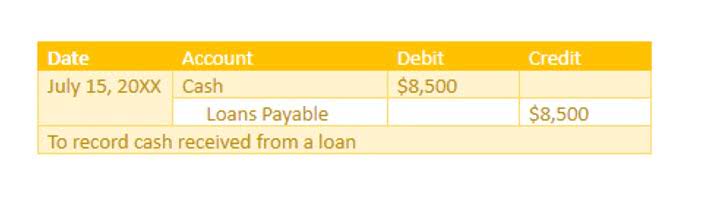
- This is posted to the Unearned Revenue T-account on the debit side (left side).
A
summary showing the T-accounts for Printing Plus is presented in
Figure 3.10. Accounting software tracks your company’s balance sheet and income statements. But it can only give you dynamic figures that provide superficial insight into ways to improve spend management. You can see journal entries over a given period of time and view business transactions. But a T-account doesn’t necessarily help your business make wise decisions regarding managing its spending intelligently. Interest income – Interest income is the most common form of non-operating income because most businesses earn small amounts of interest from their savings and checking accounts.
On the 18th, Nick’s crew cleaned a series of vacation rentals for Our Town Properties for $2,000, and on the 19th the team cleaned the Multi-Purpose Athletic Club for $1,750. On the 20th, he sat down and sent bills (invoices) to all these customers. Here is how you would make an entry in your books for a Dividend Revenue account. In your final activity for Week 4 you will prepare a balance sheet in the vertical format for Edgar Edwards Enterprises at the end of the day on 6 July 20X2. As of October 1, 2017,
Starbucks had a total of
$1,288,500,000 in stored value card liability. When you do your account balance, the balance itself should go on what’s called the “normal side”.
A T-account is used in bookkeeping, which involves keeping track of the financial transactions that occur within a business. The name is based on the way that a T-account appears, with two columns and one line. For example, a company’s checking account (an asset) has a credit balance if the account is overdrawn. If you have buildings or equipment that you rent out on the side, you need to make a Rent Revenue account. Here is an example of a journal entry you would create when you make a sale (using accrual accounting).
A customer pays you $180 for a 12-month candy subscription. When you receive the money, you will debit it to your cash account because the amount of cash your business has increased. And, you will credit your deferred revenue account because the amount of deferred revenue is increasing. The revenue account is an equity account with a credit balance. This means that a credit in the revenue T-account increases the account balance.
What side of the T account is revenue?
always go on the left side of the T, and credits (abbreviated Cr.) always go on the right. Accountants record increases in asset, expense, and owner's drawing accounts on the debit side, and they record increases in liability, revenue, and owner's capital accounts on the credit side.
Bookkeeping 101: Bookkeeping Basics for Small Businesses
Many of the operations are automated in the software, making it easy to get accurate debits and credits entered. There are numerous types of outsourced bookkeeping services you can hire. Local bookkeepers, in-house bookkeepers, and freelance bookkeepers, to name just a few. You can even hire a virtual bookkeeper to do all your bookkeeping and accounting tasks while being located anywhere in the world. Income statements feature the business expenses and revenue by different categorized profit centers. Virtual bookkeeping services can also save you money through tax preparation services and tax filing, providing peace of mind that you’re 100% compliant with all tax rules.
Keep records of your business transactions for 6 years if you don’t report income and if the income represents over 25% of your return gross income. Luckily, with simple bookkeeping tips in this article, you can streamline the whole process in a matter of days. As long as you automate tasks and pick the right bookkeeping system for your specific needs, you’ll have an easy time implementing all the advice above.
- It also keeps you organized for tax time and helps you find tax deductions and shows your credibility to investors and lenders so you can get funding.
- These integrations make it easy to track your bookkeeping and accounting data in one place.
- Online bookkeeping services can save business owners both time and money.
- Our ratings considered everything from pricing and customer reviews to the number and quality of features available and what our panel of experts thought about the services available.
- This happens when you transfer money from one of your business accounts to another one or to a business credit card.
- You have to know the ins and outs of your business expenses and all your personal and business finances.
Perform Journal Entries to Debit and Credit Accounts
This happens when you transfer money from one of your business accounts to another one or to a business credit card. The double-entry bookkeeping method, on the other hand, is usually used by businesses that want to expand or do need more nuanced reporting. Bookkeeping is important because it gives you insight into where your money is going and how your business is performing, helping you make smart business decisions. It also keeps you organized for tax time and helps you find tax deductions and shows your credibility to investors and lenders so you can get funding. You can cancel your QuickBooks Live Expert plan or upgrade from Expert Assisted to Expert Full-Service Bookkeeping at anytime. To downgrade from Expert Full-Service Bookkeeping, you may need to wait until the end of your current subscription billing period.
Keep Track of Cash Payments
The weekly tasks you can assign to employees or complete yourself. Paying bills and invoicing happen daily, so they can be complicated to outsource. But complex projects like reconciling your accounts and closing the books should be done by a professional. However, you may reach a point where no enthusiasm or persistence level can help. Bookkeeping is often the first aspect of the business to suffer.
However, it’s important to note that your bookkeeper won’t be the only person working on your business finances. So you’ll want to understand which tasks your bookkeeper is and isn’t responsible for handling. Katherine Haan is a small business owner with nearly two decades of experience helping other business owners increase their incomes. FinancePal is best for small businesses that need bookkeeping assistance, including catch-up bookkeeping, entity formation and tax filing. profit and loss statement template pdf templates Botkeeper is best for accounting firms that want to scale by automating bookkeeping tasks.
Bookkeeping is the practice of organizing, classifying and maintaining a business’s financial records. It involves recording transactions and storing financial documentation to manage the overall financial health of an organization. Most businesses use an electronic method for their bookkeeping, whether it’s a simple spreadsheet or more advanced, specialized software. Some accounting software products automate bookkeeping tasks, like transaction categorization, but it’s still important to understand what’s happening behind the scenes. It all begins with getting your accounting software set up correctly. Having a solid overview of your bookkeeping and accounting reports gives you a good enough start for cash flow projections for the following months.
A safe way to protect the cash flow is to track how long it takes for the clients to pay the invoices. It’s helpful to create income statements because they compare the current numbers to the budget, but also the historical performance of the business. This gives you plenty of room to spot errors you should correct. Remember that assets are what your company owns, and liabilities are what it owes. A balance sheet can help you decide whether your business can meet all its financial obligations.
FAQs On Online Bookkeeping Services
Bookkeeper is one of the pricier business bookkeeping services on our list, but it comes with many possible add-on services. If you’re looking for a bookkeeping solution you can stick with for the long run, Bookkeeper has most bookkeeping features you could possibly want as an what is days payable outstanding add-on. Possible add-ons include payroll services, individual and business tax returns, and financial performance reporting with key performance indicators. FreshBooks’ online bookkeeping services help you protect your profits, save you time, and grow your business. In collaboration with Bench (more on them later), we offer expert virtual bookkeeping systems and tax services support.
It encompasses a variety of day-to-day tasks, including basic data entry, categorizing transactions, managing accounts receivable and running payroll. There are many easy programs to use for small business bookkeeping. FreshBooks is one of the most highly rated and straightforward programs for accurate accounting records, professional bookkeeper services, and more. Every online bookkeeping service will offer a mixture of different features ranging from basic to advanced.
How Expert Assisted works
Your reports will look different depending on which you decide what is a lifo reserve to use. Our partners cannot pay us to guarantee favorable reviews of their products or services. Ignite Spot Accounting is best for businesses that want bookkeepers who are certified in popular bookkeeping programs. It’s important to send invoices right after delivering the goods or performing services. The customer is more likely to pay fast, given that the service is fresh in their minds.
11 2 Incremental costs of obtaining a contract

Incremental cost, also referred to as marginal cost, is the total change a company experiences within its balance sheet or income statement due to the production and sale of an additional unit of product. It’s calculated by analyzing the additional expenses incurred based on the addition of the unit. Incremental costs may be classified as relevant costs in managerial accounting. Incremental cost is calculated by analyzing the additional expenses involved in the production process, such as raw materials, for one additional unit of production. Understanding incremental costs can help companies boost production efficiency and profitability. Marginal cost incremental cost accounting is the change in total cost as a result of producing one additional unit of output.

2 Incremental costs of obtaining a contract
Incremental cost is how much money it would cost a company to make an additional unit of product. Analyzing incremental costs helps companies determine the profitability of their business segments. Therefore, knowing the incremental cost of additional units of production and comparing it with the selling price of these goods assists in meeting profit goals.

Allocation of Incremental Costs
- It is usually made up of variable costs, which change in line with the volume of production.
- My Accounting Course is a world-class educational resource developed by experts to simplify accounting, finance, & investment analysis topics, so students and professionals can learn and propel their careers.
- The reason why there’s a lower incremental cost per unit is due to certain costs, such as fixed costs remaining constant.
- Economies of scale occur when increasing production leads to lower costs since the costs are spread out over a larger number of goods being produced.
- It is usually calculated when the company produces enough output to cover fixed costs, and production is past the breakeven point where all costs going forward are variable.
Relevant costs (also called incremental costs) are incurred only when a particular activity has been initiated or increased. An impairment loss can be reversed in subsequent periods (IFRS 15.104). Thus, the above are some benefits that the procedure of marginal cost analysis contributes to the entire manufacturing process.
Incremental Analysis

Since incremental costs are the costs of manufacturing one more unit, the costs would not be incurred if production didn’t increase. Incremental costs are usually lower than a unit average cost to produce incremental costs. Incremental costs are always composed of variable costs, which are the costs that fluctuate with production volumes. Long-run incremental cost (LRIC) is a forward-looking cost concept that predicts likely changes in relevant costs in the long run. It includes relevant and significant costs that exert a material impact on production cost and product pricing in the long run. They can include the price of crude oil, electricity, any essential raw material, etc.

Another issue arises concerning their presentation in the income statement. In my view, contract costs should be presented according to their nature or function, depending on the presentation method adopted by the entity (for instance, they may be included as cost of sales). It is important to note that this issue is not explicitly addressed in IFRS 15. Upon the expiry of the 5-year contract, Customer X signs another contract, this time for 10 years. Entity A concludes that the contract costs will be utilised in fulfilling the new contract and adjusts the amortisation period accordingly.
- As noted previously, contract costs can be amortised over the expected contractual relationship period, which can exceed the current contract term.
- Then, a special order arrives requesting the purchase of 15 items at $225 each.
- Contrastingly, discretionary annual bonuses — contingent upon factors like annual sales targets, the entity’s overall profitability, and individual performance assessments — are not recognised as assets.
- Incremental costs are also referred to as marginal costs, but there are some basic differences between them.
- If we look at our above example, the primary user is product ‘X’ which was already being manufactured at the plant and utilizing the machinery and equipment.
- Let’s say, as an example, that a company is considering increasing its production of goods but needs to understand the incremental costs involved.
- As a third example, the sale of a subsidiary includes the legal costs of the sale.
In essence, it assists a company in making profitable business decisions. Deciding on the capitalisation of contract costs requires careful judgement. The primary focus should be on determining which costs generate or enhance resources that will be used in satisfying (or in continuing to satisfy) performance obligations in the future. As clarified in IFRS 15.BC308, entities cannot capitalise costs merely to smooth out profit margins across income summary the life of a contract by evenly allocating revenue and costs. Entities are not permitted to capitalise this initial loss on a contract merely because they are awaiting the resolution of the constraining estimates of variable consideration.
What Does Incremental Costs Mean?
These requirements, however, are only applicable in instances where no other rules within IFRS address these costs (IFRS 15.8). It also helps a firm decide whether to manufacture a good or purchase it elsewhere. On 1 January 20X1, Entity A enters into a contract with Customer X to manage his information technology data centre.


 /wabisabisupplement